

Published: March 2026
Last Updated: March 2026
INTRODUCTION
Retail participation in Indian financial markets has increased significantly over recent years, particularly across equity and derivatives segments. Investor awareness initiatives published by the Securities and Exchange Board of India (SEBI) highlight the importance of structured understanding and disciplined behaviour for new market participants.
Data from exchanges such as the National Stock Exchange (NSE) indicates that many individuals enter financial markets without a clearly defined framework for interpreting price movement or managing uncertainty. This has led to increased attention on the concept of a “trading plan.”
For beginners, the idea of a trading plan is often misunderstood as a set of instructions or rules for market activity. However, in financial education, it is better understood as a structured framework for organizing how market behaviour is observed and interpreted.
This article is intended to provide educational insights into the concept of a trading plan and to explain its role in understanding financial markets from a structured perspective.
WHY THIS TOPIC MATTERS FOR LEARNERS
Beginners exploring financial markets often encounter fragmented ideas about trading approaches, indicators, and market behaviour without a unifying structure. This can result in inconsistent interpretation of information.
In structured financial education, it is commonly observed that learners attempt to understand individual concepts without integrating them into a broader framework. A trading plan is often introduced as a way to organize these elements conceptually.
Understanding the role of a trading plan helps learners:
recognize the importance of structure in market observation
understand how different concepts can be organized coherently
develop clarity in interpreting market behaviour
This contributes to a more disciplined and systematic understanding of financial markets.
What Is a Trading Plan?
A trading plan refers to a structured framework used by market participants to organize how they observe, interpret, and respond to market behaviour. It provides a conceptual structure for understanding different aspects of market interaction.
It does not eliminate uncertainty but helps in organizing decision-making processes.
What Is Trading Discipline?
Trading discipline refers to the ability to consistently follow a predefined framework when interpreting market behaviour, regardless of changing conditions or external influences.
It reflects consistency in approach rather than outcomes.
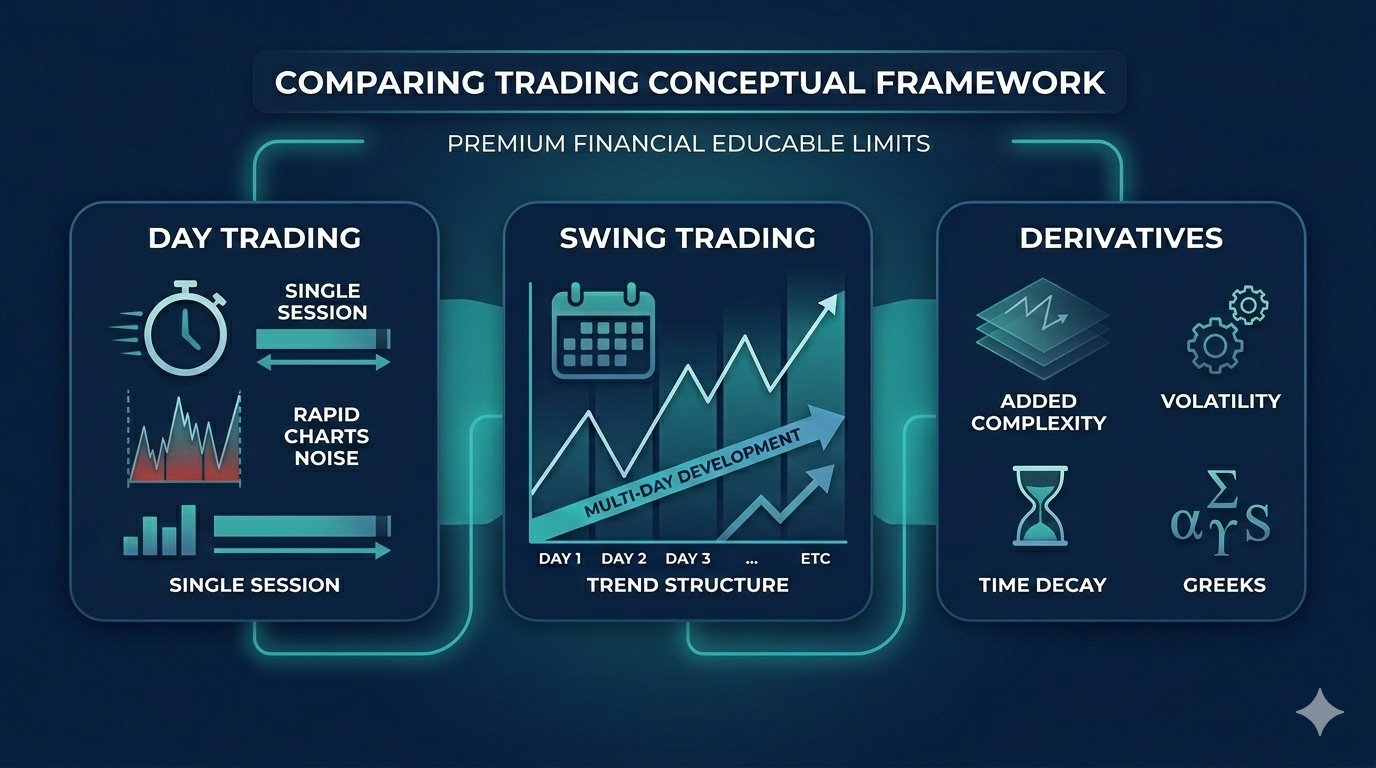
Financial markets operate as complex systems influenced by multiple interacting factors such as liquidity, institutional participation, economic developments, and behavioural responses.
Market participants interpret these dynamics through structured frameworks that guide how they observe price movement, evaluate conditions, and respond to uncertainty. A trading plan represents one such framework.
In Indian financial markets, participants often interact with both equity and derivatives segments, where varying levels of complexity exist. Without a structured approach, interpreting these interactions can become inconsistent.
Research-oriented observations in financial education suggest that beginners often face challenges not due to lack of information, but due to absence of structured frameworks that integrate different concepts into a coherent understanding.
Components of a Trading Plan
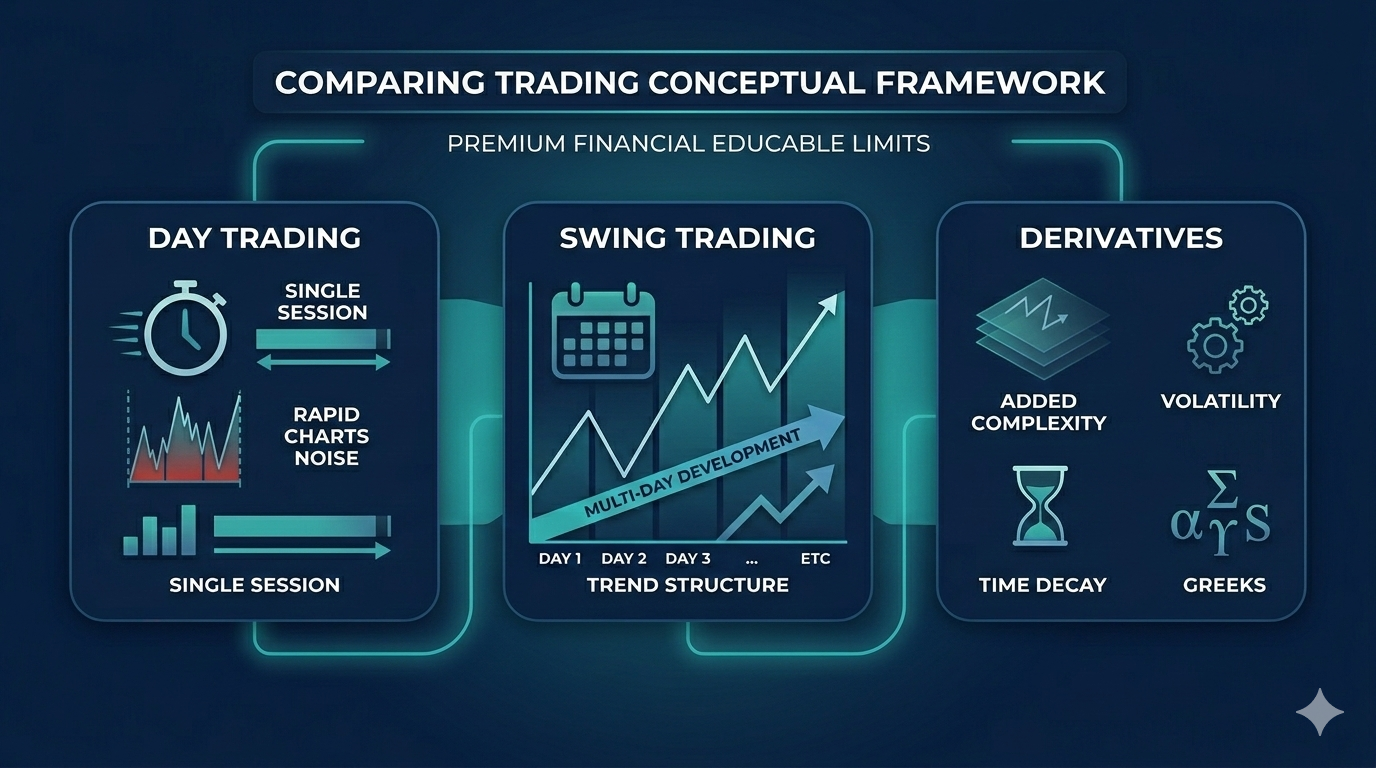
A trading plan typically includes multiple conceptual components such as time horizon, market observation framework, and risk awareness. These components help structure how market activity is interpreted.
Market Context (India-specific)
In Indian markets, these components interact with factors such as exchange structure (NSE/BSE), regulatory environment, and increasing retail participation in derivatives segments.
Behavioural Considerations
Beginners may attempt to adopt isolated elements of a trading plan without understanding how these components function together, leading to fragmented interpretation.
Role of Time Horizon in Planning
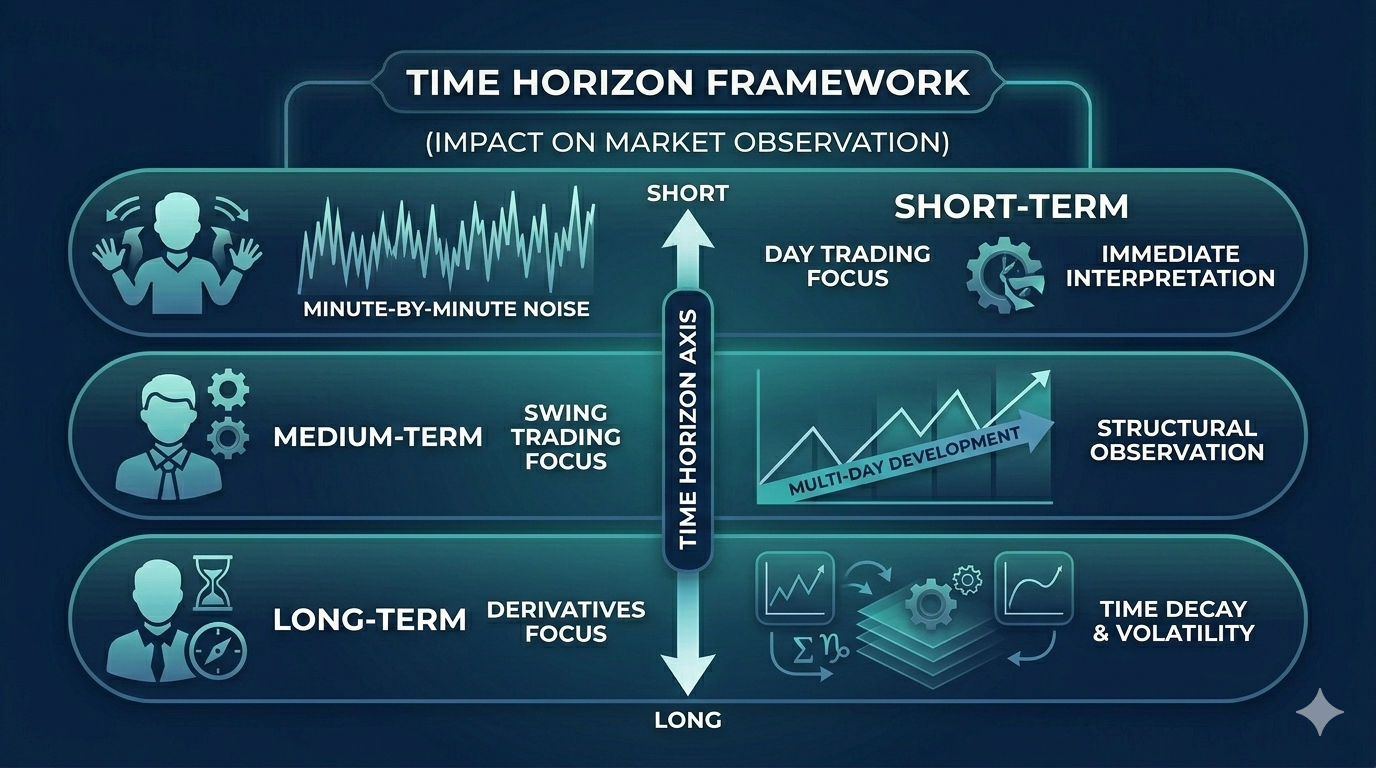
Time horizon defines the duration over which market behaviour is observed, influencing how price movement is interpreted.
Market Context (India-specific)
Different market participants in India operate across varying time horizons, from intraday activity to multi-day observation, affecting overall market behaviour.
Behavioural Considerations
Learners may shift between time horizons without clarity, leading to inconsistency in understanding market structure.
Importance of Consistency in Market
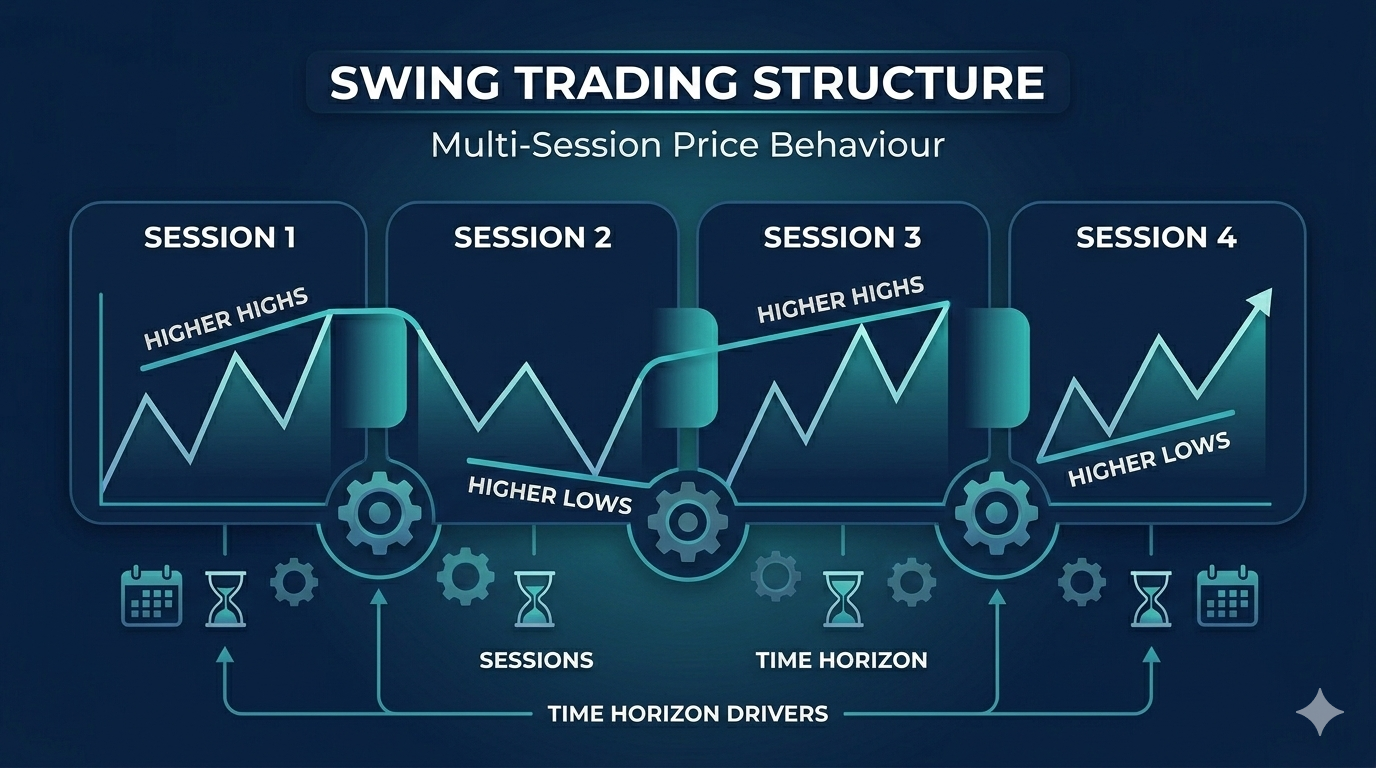
Consistency refers to maintaining a stable framework for interpreting market behaviour over time.
Market Context (India-specific)
In Indian financial markets, frequent exposure to diverse information sources can challenge consistency in interpretation.
Behavioural Considerations
Beginners may frequently change their approach based on external inputs, which can disrupt structured understanding.
COMPARISON TABLE
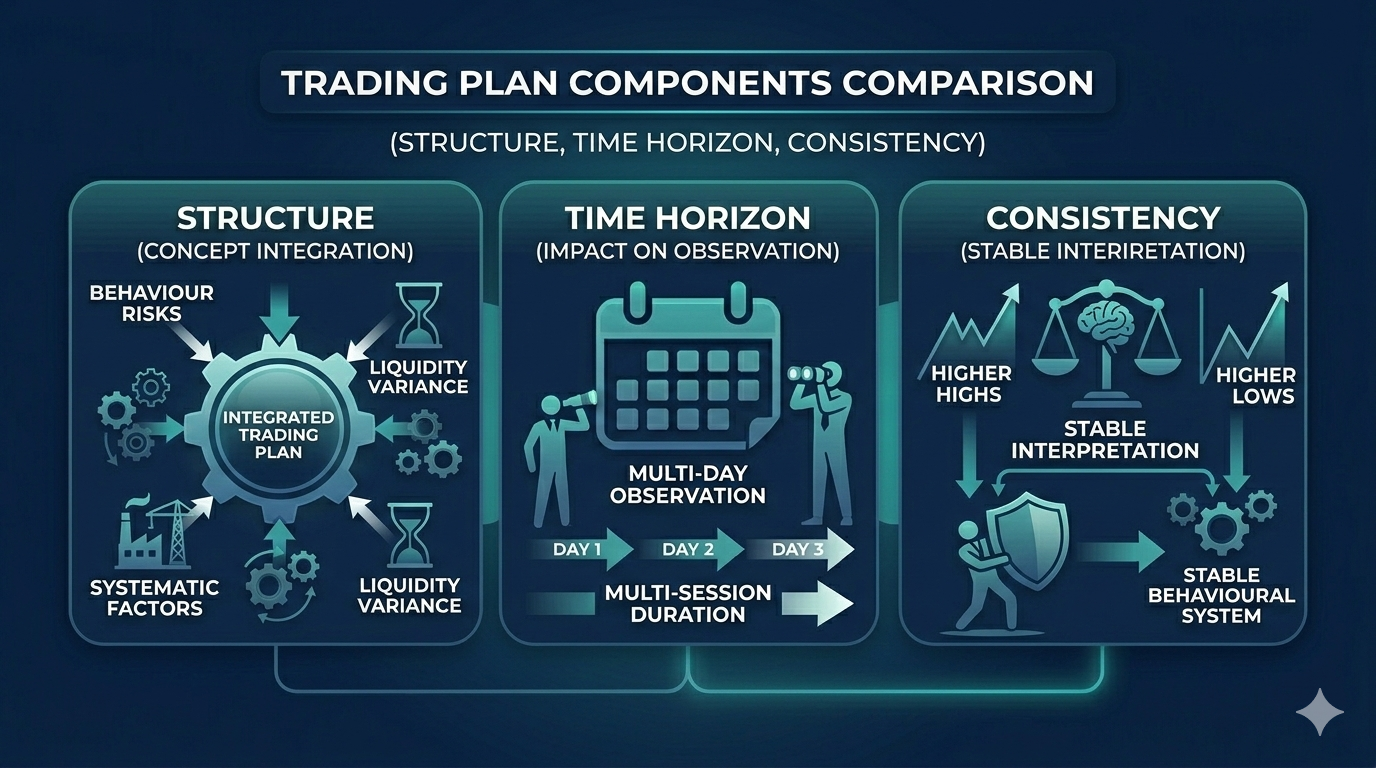
Concept Core Issue Market Impact Learning Challenge
Trading Plan Lack of structure Inconsistent interpretation Organizing concepts
Time Horizon Variable observation Different price perspectives Maintaining clarity
Consistency Changing approach Irregular understanding Behavioural discipline
KEY TAKEAWAYS
a trading plan provides structure to market interpretation
time horizon influences how price movement is understood
consistency supports clarity in analysis
market behaviour remains uncertain
structured understanding does not determine outcomes
COMMON BEGINNER MISTAKES
assuming a trading plan guarantees outcomes
focusing on isolated concepts instead of structure
frequently changing interpretation methods
misunderstanding the role of time horizon
relying on external inputs without context
confusing discipline with rigidity
LIMITATIONS
Understanding the concept of a trading plan provides a framework for organizing market interpretation, but it does not fully capture the complexity of real-time market behaviour.
Financial markets are dynamic and influenced by multiple variables that cannot be fully structured into a fixed framework.
In professional financial education, a trading plan is viewed as an evolving structure rather than a static system.
RISK AWARENESS
Investor awareness material published by SEBI highlights that lack of structured understanding is a key challenge among retail participants in financial markets.
Financial stability insights from the Reserve Bank of India (RBI) emphasize that market behaviour is influenced by broader economic and systemic factors.
These observations reinforce that uncertainty remains a core aspect of financial markets regardless of the framework used.
WHAT THIS DOES NOT DO
Understanding a trading plan does not ensure successful participation in financial markets.
Understanding ≠ outcome.
BEGINNER LEARNING PATH
Step 1 – understand basic financial market terminology
Step 2 – study how market structure influences price movement
Step 3 – learn about different time horizons
Step 4 – explore risk and uncertainty in markets
Step 5 – develop awareness of structured interpretation
FAQ SECTION
What is a trading plan in the Indian stock market?
A trading plan is a structured framework used to organize how market behaviour is observed and interpreted.
Why do beginners need a trading plan?
It helps organize different concepts into a coherent structure for understanding markets.
Is a trading plan fixed or flexible?
It is typically considered an evolving framework rather than a fixed structure.
How does a trading plan relate to discipline?
Discipline refers to consistency in following a structured framework.
Does a trading plan reduce uncertainty?
No, financial markets remain uncertain regardless of the framework used.
AUTHOR
Vicky Mehta is a stock market trainer with over 20+ years in financial markets and the founder of Succinct Learning Platforms Pvt. Ltd.
He holds an MBA in Financial Markets in collaboration with NSE Academy and is an NSE Certified Market Professional.
His work focuses on structured financial education, risk management frameworks, and disciplined market understanding.
SOURCES
SEBI – Investor Awareness & Protection material
NSE – Market activity and derivatives participation
RBI – Financial Stability Reports
DISCLAIMER
This article is provided for educational and informational purposes only and should not be interpreted as investment or trading advice.
Financial markets involve risk, including the potential loss of capital. Readers should consult a SEBI-registered investment advisor before making financial decisions.
ANOTHER RELATED ARTICLES
| trading plan for beginners India |