

Published: May 2026
Last Updated: April 2026
INTRODUCTION
Many traders enter the stock market expecting clarity.
But after some time, they experience confusion, inconsistency, and difficulty explaining their own decisions.
This question—why most traders lose money in the stock market—has become increasingly relevant with the rise in retail participation across India.
Over the last decade, activity on exchanges like National Stock Exchange and Bombay Stock Exchange has grown significantly due to digital access and low-cost platforms.
At the same time, investor awareness initiatives by Securities and Exchange Board of India highlight that a large number of new participants struggle to sustain outcomes, especially in short-term trading segments.
This article is strictly educational.
Its purpose is to explain behavioural and structural reasons behind this pattern—not to guide participation.
WHY THIS TOPIC MATTERS FOR LEARNERS
For beginners, the market often appears simple at first.
Charts move. Prices change. Opportunities seem visible.
But after some time:
- decisions become inconsistent
- outcomes become unpredictable
- clarity starts reducing
A common observation is this:
Many participants remain active for months or years,
but cannot clearly explain why they entered or exited a trade.
This gap between activity and clarity is where most confusion begins.
DEFINITION
What Is Trading in the Stock Market?
Trading refers to buying and selling financial instruments such as equities or derivatives over short timeframes, focusing on price movement rather than long-term ownership.
What Is Inconsistent Trading Behaviour?
It refers to situations where decisions vary across trades without a defined structure, making outcomes difficult to evaluate or interpret.
EXPLANATION
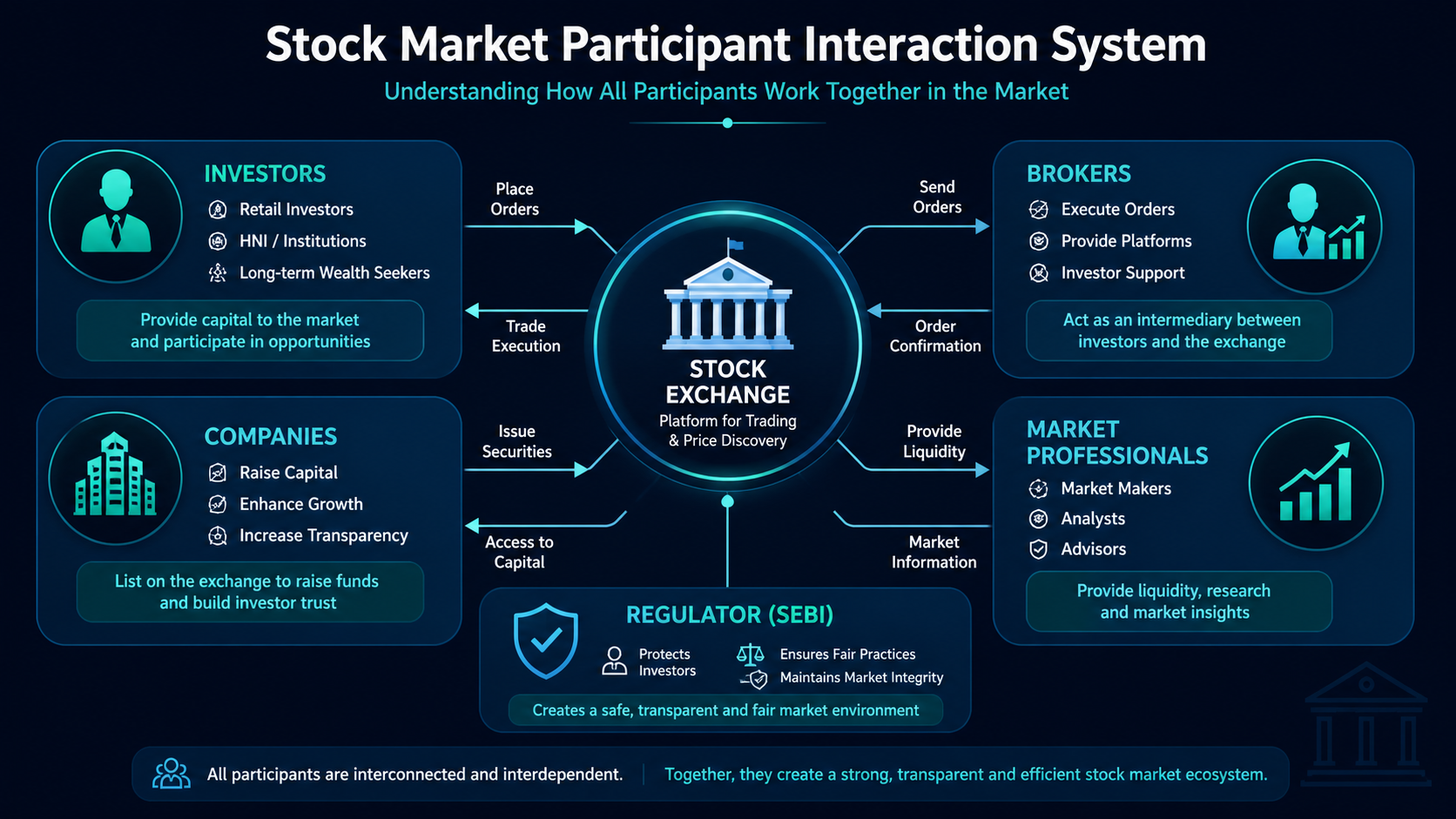
Stock markets operate as dynamic systems where multiple participants interact simultaneously.
These include:
- retail traders
- institutional participants
- algorithmic systems
- market makers
Price movement is not isolated—it emerges from continuous interaction.
From a behavioural perspective, repeated exposure to variable outcomes without structured interpretation can lead to inconsistent decision patterns.
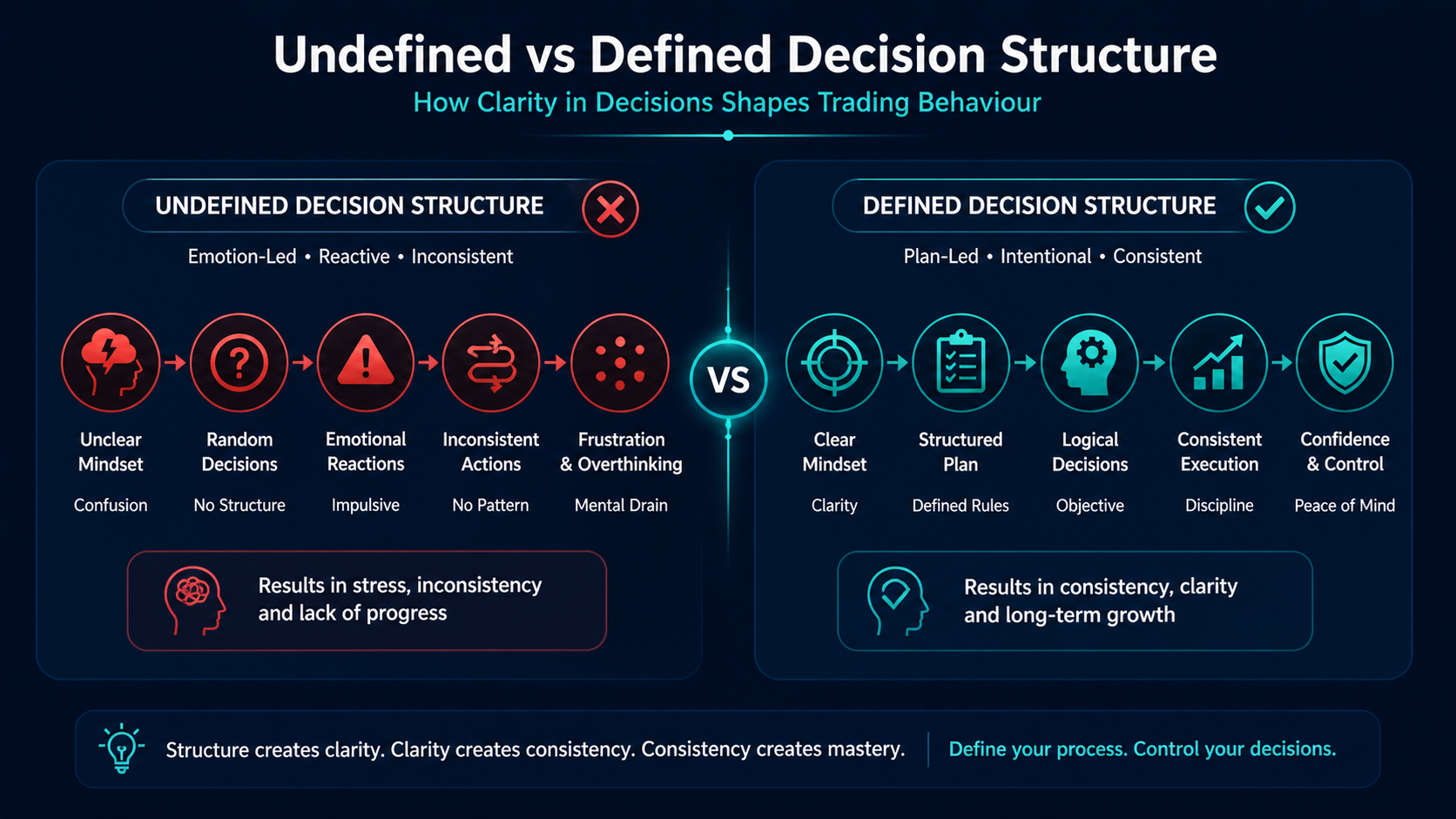
Lack of Defined Decision Criteria
Structural Characteristics
In many cases, trading decisions are not based on predefined conditions.
Entry, exit, and exposure may change from one trade to another.
This prevents the formation of a repeatable structure.
Market Context (India-specific)
With increased access to trading apps in India, participation has become easier.
However, ease of access does not include clarity of decision-making.
Data from NSE derivatives activity shows increasing retail participation, especially in options, where decision clarity is often limited.
Behavioural Considerations
When criteria are not defined:
- entries may depend on recent movement
- exits may change during execution
- exposure may vary without planning
Behaviour becomes reactive instead of structured.
Misinterpretation of Early Outcomes
Structural Characteristics
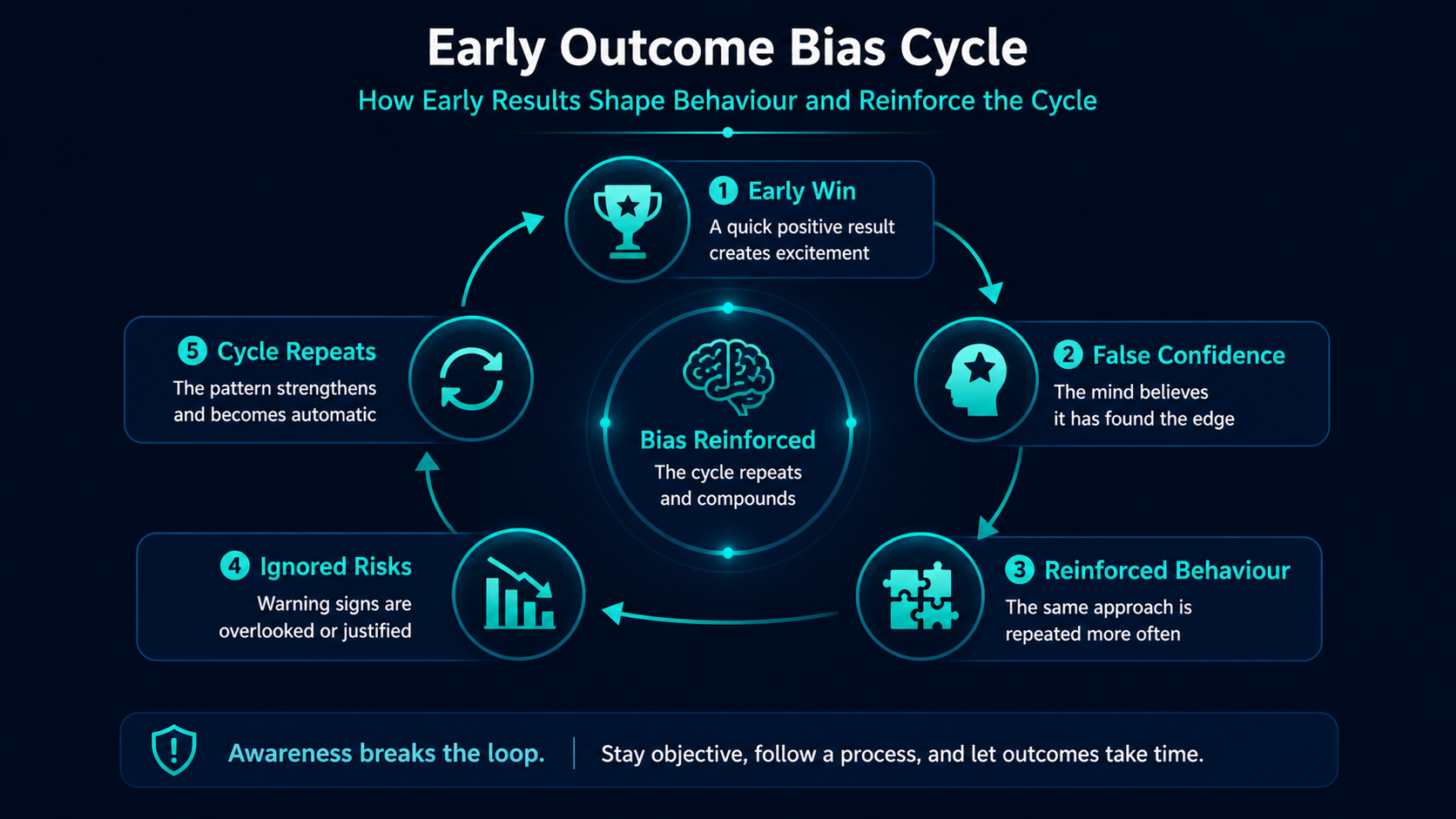
Early experiences often create strong impressions.
Positive outcomes are sometimes interpreted as understanding rather than variation.
This reinforces unstructured behaviour.
Market Context (India-specific)
In highly liquid segments like index derivatives on NSE, short-term movements can appear consistent.
New participants may interpret these movements as predictable.
SEBI awareness material highlights risks of such interpretation.
Behavioural Considerations
This leads to:
- increased confidence after early success
- higher exposure without evaluation
- difficulty accepting variability
Over time, behaviour becomes unstable.
Absence of Risk Awareness
Structural Characteristics
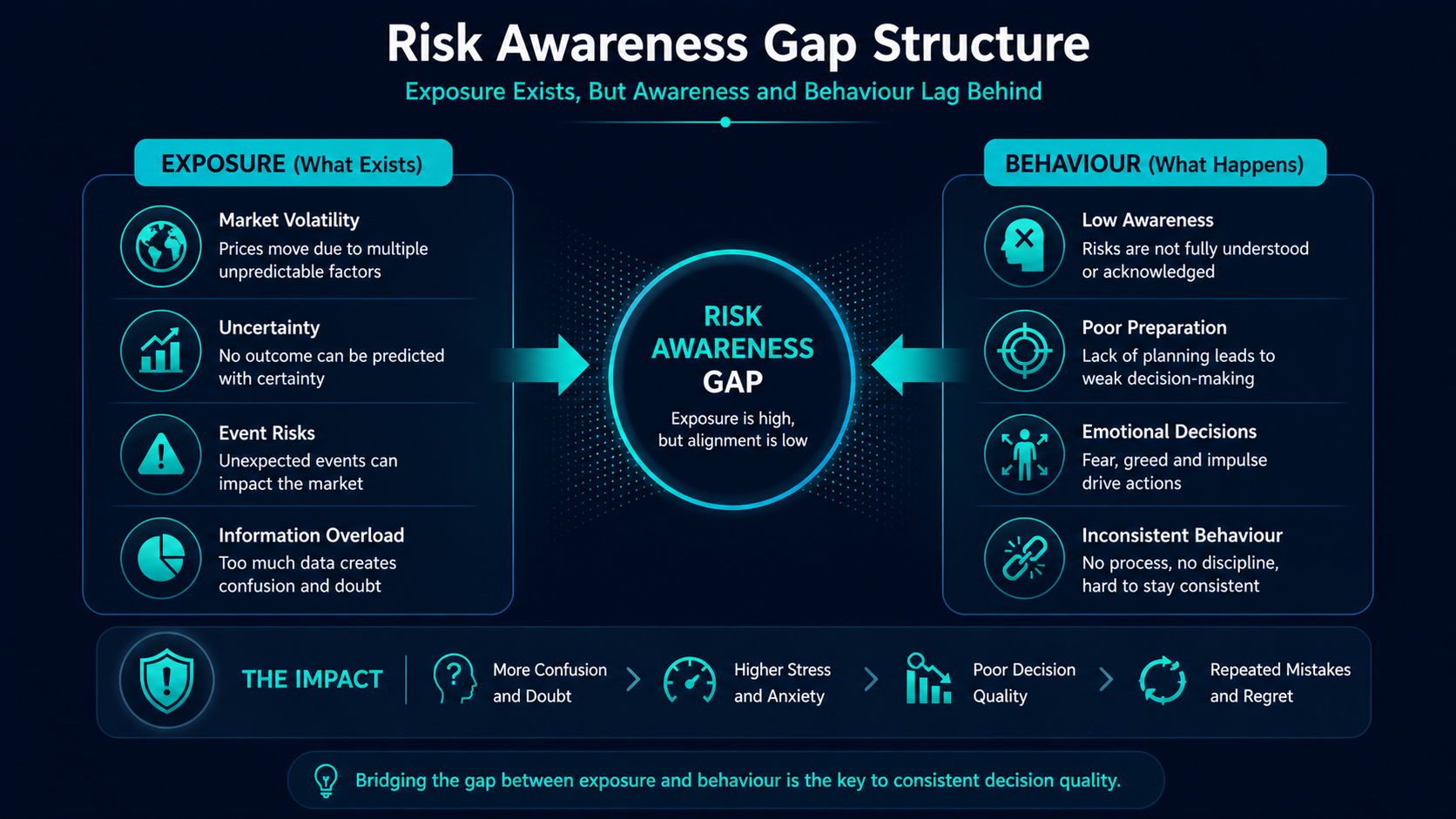
Risk is not only financial—it is behavioural.
Without predefined limits, exposure may increase unintentionally.
Market Context (India-specific)
According to reports by Reserve Bank of India, financial participation without risk awareness increases systemic vulnerability.
Retail participation in leveraged segments adds further complexity.
Behavioural Considerations
Without awareness:
- exposure may increase after positive outcomes
- exit decisions may get delayed
- emotional response may influence next decisions
This affects consistency over time.
Influence of External Information
Structural Characteristics
Many participants depend on external inputs:
- news
- social media
- informal advice
These inputs are often unstructured.
Market Context (India-specific)
Digital financial content has grown rapidly in India.
However, not all information is verified or contextual.
SEBI has issued repeated advisories on unregulated sources.
Behavioural Considerations
This results in:
- frequent change in direction
- lack of ownership in decisions
- difficulty reviewing past actions
Behaviour becomes fragmented.
COMPARISON TABLE
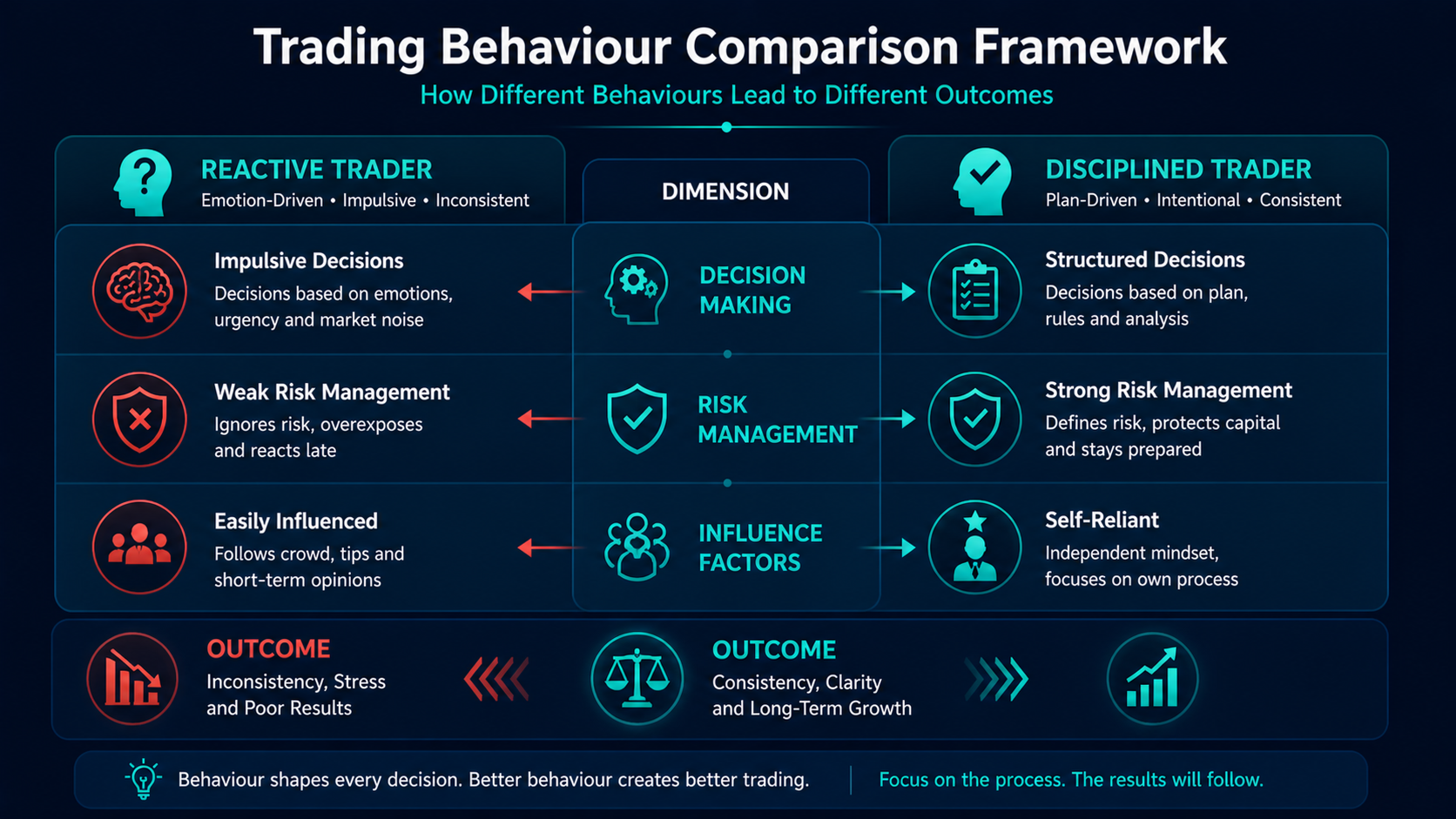
| Concept | Core Issue | Market Impact | Learning Challenge |
|---|---|---|---|
| Undefined Decisions | No fixed criteria | Irregular participation | Difficult to evaluate actions |
| Early Outcome Bias | Misinterpreting results | Increased exposure | False confidence |
| Risk Misunderstanding | No exposure limits | Volatility impact | Behavioural instability |
| External Influence | Dependence on others | Inconsistent direction | Lack of clarity |
KEY TAKEAWAYS
- Trading without defined criteria leads to inconsistency
- Early experiences do not indicate structured understanding
- Risk includes behavioural instability
- Market participation involves uncertainty
- Understanding does not ensure outcomes
COMMON BEGINNER MISTAKES
- Treating early outcomes as confirmation
- Changing decisions during trades
- Increasing exposure without structure
- Following unverified information
- Participating without defined conditions
- Ignoring behaviour during evaluation
LIMITATIONS
Understanding patterns does not provide a method to avoid them.
Even experienced participants face difficulty maintaining consistency due to changing market conditions.
Professional environments rely on structure, which individual participants may not have.
RISK AWARENESS
Market behaviour is uncertain and variable.
Securities and Exchange Board of India emphasises that price movements cannot be predicted with certainty.
Reports by Reserve Bank of India also highlight external influences on financial systems.
Outcomes are influenced by multiple factors beyond individual control.
WHAT THIS DOES NOT DO
This article does not provide any method, strategy, or instruction.
Understanding market behaviour does not translate into predictable outcomes.
Knowledge improves awareness, not consistency.
BEGINNER LEARNING PATH
- Understand how markets function structurally
- Observe behaviour across different situations
- Recognise uncertainty in price movement
- Identify patterns without forcing interpretation
- Build conceptual clarity before participation
FAQ SECTION
What is the main reason traders struggle?
Lack of structured decision-making combined with inconsistent behaviour.
Why is trading difficult for beginners?
Because market movements involve multiple interacting factors and require interpretation.
Does experience alone improve outcomes?
Time alone does not ensure structured understanding.
Why do decisions change during trades?
Because criteria are often not predefined.
Is market behaviour predictable?
No. It is influenced by multiple dynamic factors.
AUTHOR
Vicky Mehta is a stock market trainer with over 20+ years in financial markets and the founder of Succinct Learning Platforms Pvt. Ltd.
He holds an MBA in Financial Markets in collaboration with NSE Academy and is an NSE Certified Market Professional.
His work focuses on structured financial education, risk management frameworks, and disciplined market understanding.
SOURCES
- SEBI – Investor Awareness Material
- NSE – Market Activity Reports
- RBI – Financial Stability Reports
DISCLAIMER
This content is for educational purposes only.
It does not constitute financial advice.
Please consult a SEBI-registered advisor before making financial decisions.
other related topics
Discipline in Trading Is Not a Strategy. It’s How You Behave When It Matters.
I’ve started sharing structured trading insights here.
If you’re still trying to understand markets properly, this will help.
[Trading seekho what’sapp channel ]