

Published: March 2026 Last Updated: March 2026
INTRODUCTION
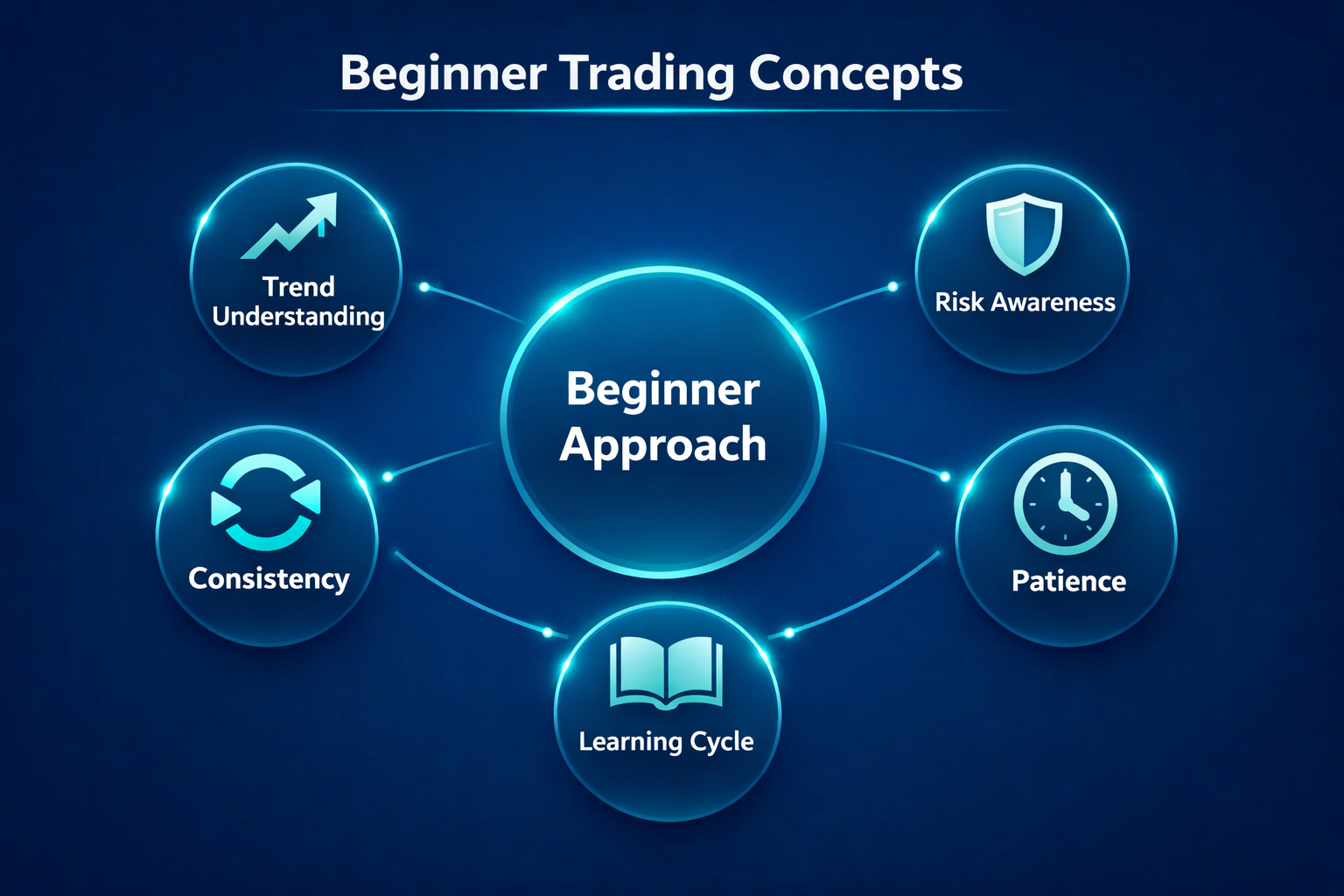
Retail participation in Indian financial markets has increased significantly in recent years, particularly in equity and derivatives segments. Data and investor awareness initiatives from the Securities and Exchange Board of India (SEBI) highlight that many new participants enter markets with limited understanding of how trading approaches differ in structure and complexity.
At the same time, exchange-level observations from the National Stock Exchange (NSE) show a growing presence of retail participants in both intraday and derivatives markets. This has led to widespread exposure to terms such as day trading, swing trading, and options trading.
For beginners, these terms often appear similar but represent fundamentally different approaches to observing market behaviour. Without conceptual clarity, learners may struggle to interpret how these approaches relate to time horizon, instruments, and market structure.
This article is intended to provide educational insights into commonly discussed trading approaches in the Indian stock market and to explain their structural differences from a learning perspective.
WHY THIS TOPIC MATTERS FOR LEARNERS
Beginners exploring financial markets in India frequently encounter multiple trading approaches without understanding how they differ in structure and purpose. These approaches are often discussed in fragmented ways across various sources, leading to confusion.
In structured financial education, it is commonly observed that learners attempt to understand multiple trading styles simultaneously without first understanding their underlying differences. This often results in inconsistent interpretation of market behaviour.
Understanding how trading approaches differ helps learners:
identify how market participants operate across time horizons
recognize the role of different financial instruments
develop clarity about how price movement is observed
This understanding contributes to a more structured view of financial markets rather than isolated interpretations.
DEFINITION BLOCK
What Is a Trading Strategy?
A trading strategy refers to a structured framework used by market participants to interpret price movement and organize decision-making within financial markets. It involves the use of defined approaches to observe market behaviour across different conditions.
Such strategies are conceptual tools and do not eliminate uncertainty in financial markets.
What Is a Trading Time Horizon?
A trading time horizon refers to the duration over which market participants observe and interpret price movement. It defines whether market behaviour is analysed over short-term, medium-term, or extended periods.
Different trading approaches are primarily distinguished by their time horizons.
CONCEPT EXPLANATION
Financial markets function through continuous interaction between buyers and sellers, where price movement reflects a combination of liquidity, institutional activity, macroeconomic factors, and behavioural responses.
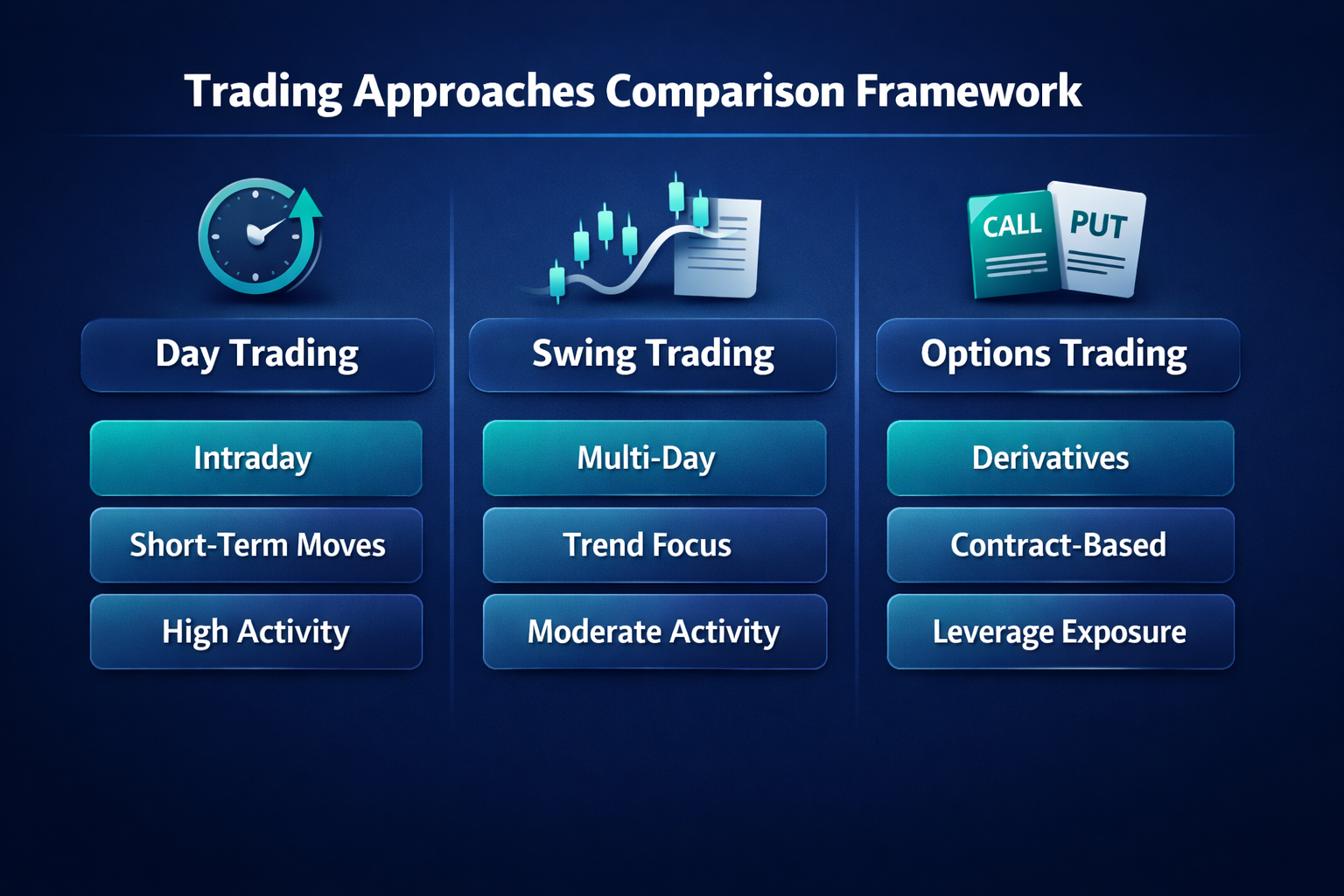
Market participants observe these price movements through structured frameworks that differ based on time horizon, instrument type, and analytical perspective. These frameworks are commonly referred to as trading approaches.
In Indian financial markets, participants may observe price movement within a single trading session, across multiple days, or through derivative instruments. Each of these approaches represents a different way of interpreting market behaviour.
Research-oriented observations in financial education indicate that early-stage learners often face difficulty not due to lack of information, but due to lack of structured understanding of how these approaches differ.
Day Trading
Structural Characteristics
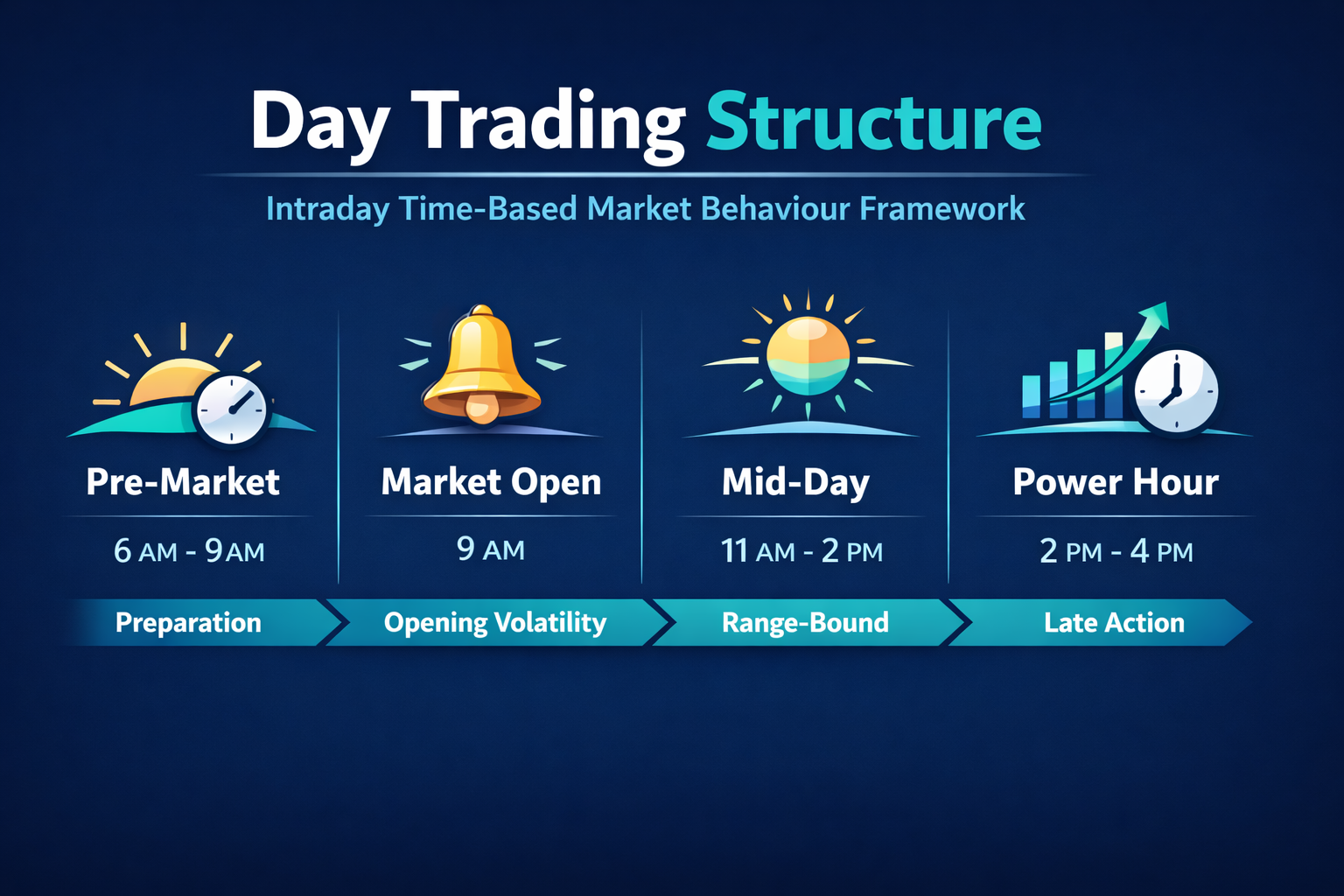
Day trading refers to the observation of price movement within a single trading session. Market positions are typically not carried beyond the same trading day.
This approach focuses on short-term price fluctuations occurring during market hours.
Market Context (India-specific)
In India, intraday activity is visible across equities and derivatives traded on exchanges such as NSE and BSE. Market movement during the day may be influenced by economic announcements, global developments, and institutional participation.
Behavioural Considerations
Beginners may perceive intraday price movement as easier to interpret due to its short duration. However, rapid fluctuations can create difficulty in understanding price behaviour without structured context.
Swing Trading
Structural Characteristics
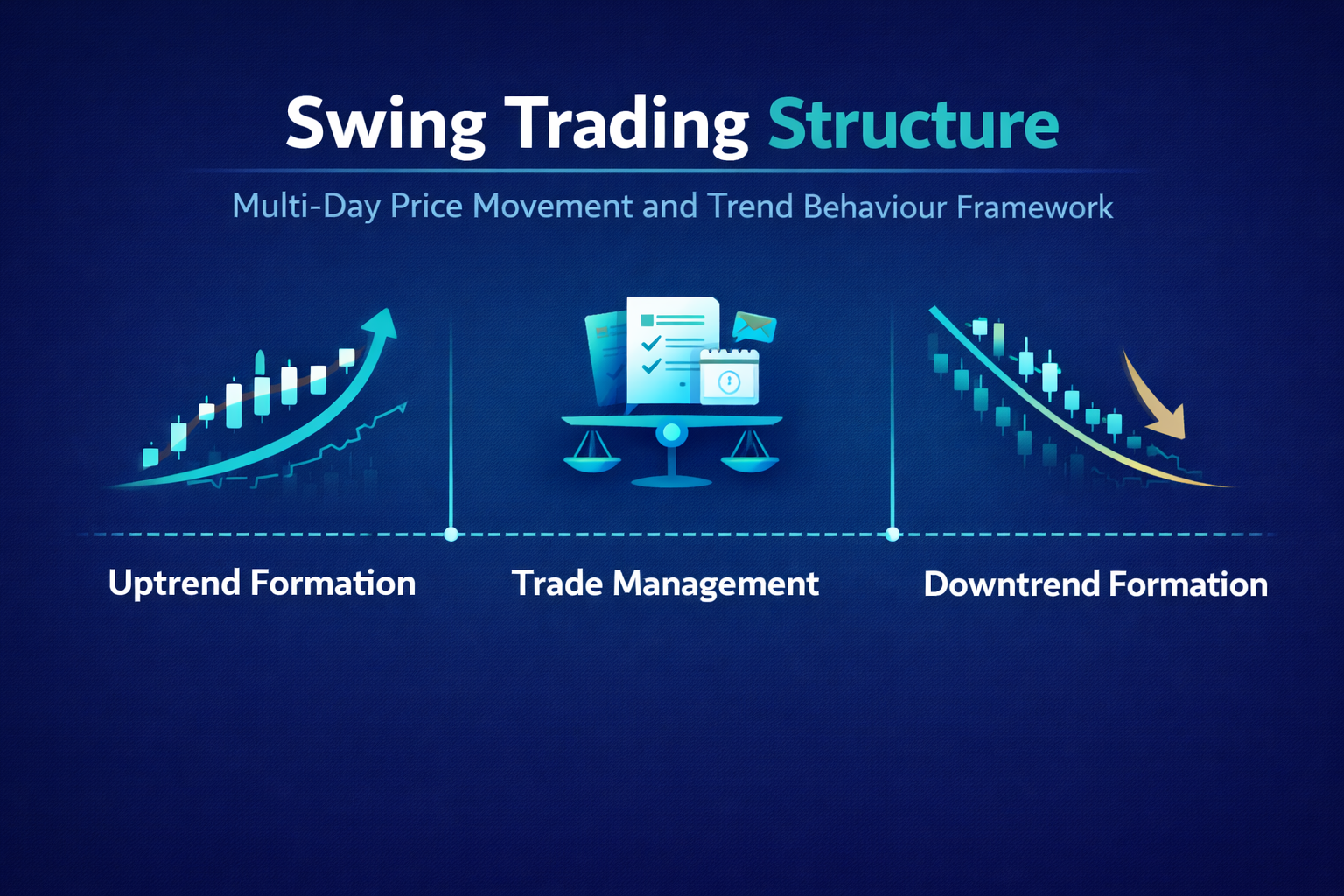
This approach focuses on price developments that unfold over a broader time horizon compared to intraday movement.
Market Context (India-specific)
In Indian markets, price movement over multiple days may reflect sector-level sentiment, macroeconomic developments, and institutional activity. Such movements are often discussed in relation to broader market trends.
Behavioural Considerations
Beginners may find multi-day price movement easier to observe compared to intraday fluctuations. However, interpreting such movement still requires understanding of broader market context.
Options Trading
Structural Characteristics
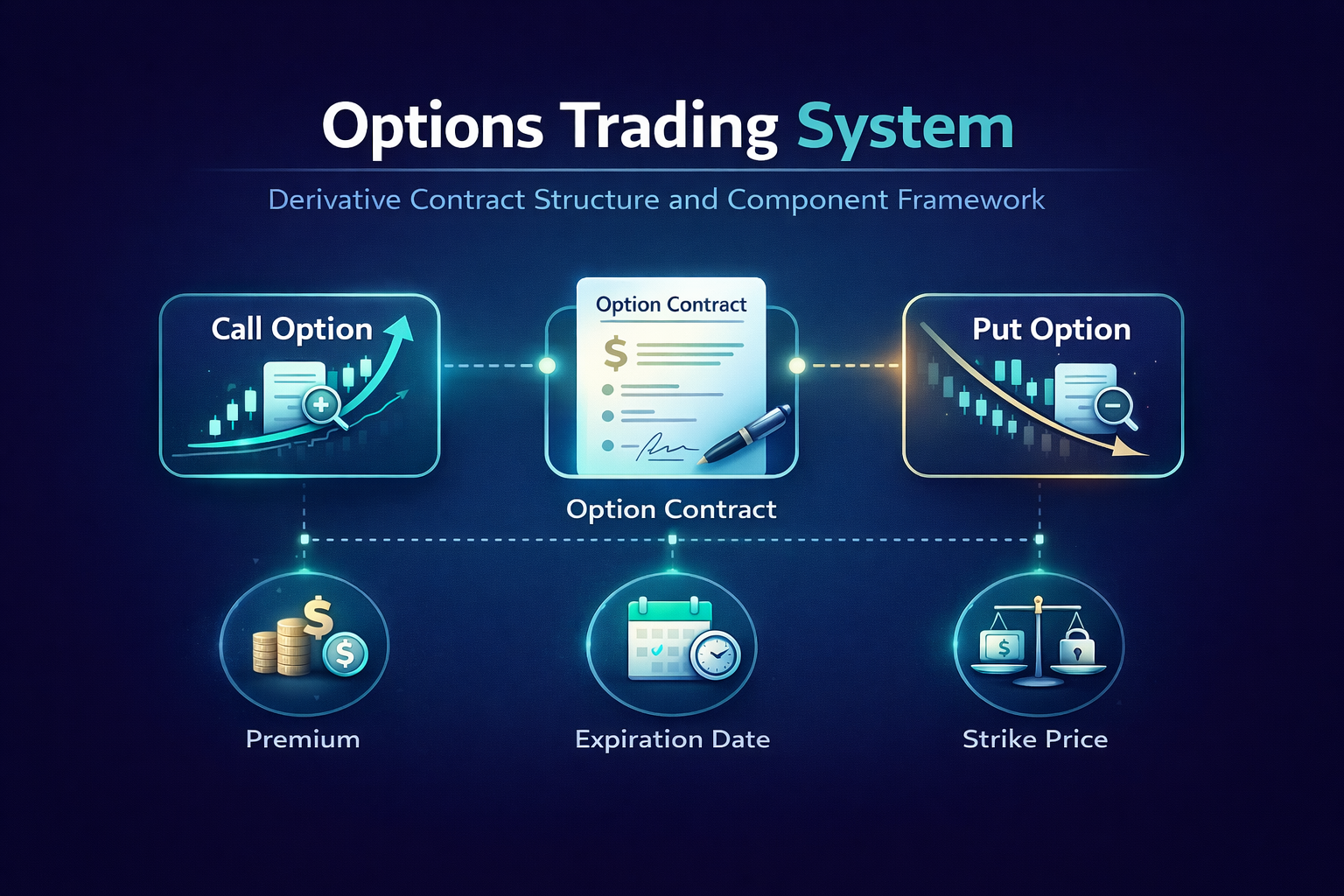
Options trading involves financial derivatives where contracts derive value from underlying assets such as stocks or indices.
These contracts include elements such as strike price, expiration date, and premium, which influence how they behave.
Market Context (India-specific)
Options trading is a significant part of derivatives activity on exchanges such as the NSE. Retail participation in index options has increased considerably in recent years.
Behavioural Considerations
Beginners may initially perceive options as extensions of equity trading. However, additional variables such as time decay and volatility introduce complexity that requires deeper understanding.
COMPARISON TABLE
Concept Core Issue Market Impact Learning Challenge
Day Trading Short-term focus Rapid price changes High monitoring requirement
Swing Trading Multi-day observation Gradual price development Context interpretation
Options Trading Derivative structure Complex price behaviour Understanding multiple variables
KEY TAKEAWAYS
trading approaches differ primarily in time horizon
market behaviour varies across different observation periods
derivatives introduce additional structural complexity
understanding structure improves conceptual clarity
learning concepts does not determine outcomes
COMMON BEGINNER MISTAKES
assuming all trading approaches function similarly
interpreting price movement without time horizon context
underestimating derivatives complexity
relying on fragmented information
confusing exposure with understanding
assuming conceptual knowledge implies readiness
LIMITATIONS
Understanding trading approaches provides a structured view of how market participants observe price movement, but it does not fully capture real-time market dynamics.
Financial markets are influenced by multiple interacting variables, including liquidity, sentiment, and macroeconomic factors. These cannot be simplified into fixed interpretations.
In professional financial education, emphasis is placed on continuous learning and contextual understanding rather than relying on simplified frameworks.
RISK AWARENESS
Investor awareness material published by SEBI highlights that insufficient understanding of risk is a common challenge among retail market participants in India.
Financial stability insights from the Reserve Bank of India (RBI) indicate that markets are influenced by broader economic conditions and systemic factors.
These observations reinforce that financial markets operate under uncertainty and cannot be reduced to predictable patterns.
WHAT THIS DOES NOT DO
Understanding trading strategies does not ensure successful participation in financial markets.
Understanding ≠ outcome.
BEGINNER LEARNING PATH
Step 1 – understand basic financial market terminology
Step 2 – study price behaviour in equity markets
Step 3 – learn how different time horizons affect market interpretation
Step 4 – explore derivatives and their structural characteristics
Step 5 – develop awareness of risk and uncertainty
FAQ SECTION
What are trading strategies in the Indian stock market?
Trading strategies are structured frameworks used to interpret price movement and organize decision-making in financial markets.
Why do beginners hear about multiple trading approaches?
Different approaches reflect different time horizons and ways of observing market behaviour.
Is options trading different from equity trading?
Options trading involves derivative contracts with additional structural elements, making it more complex than equity-based observation.
Why is understanding time horizon important?
Time horizon determines how price movement is observed and interpreted across different market conditions.
Do trading strategies reduce market uncertainty?
No, financial markets remain uncertain regardless of the approach used.
AUTHOR SECTION
Vicky Mehta is a stock market trainer with over 24 years of experience in financial markets and the founder of Succinct Learning Platforms Pvt. Ltd.
He holds an MBA in Financial Markets in collaboration with NSE Academy and is an NSE Certified Market Professional.
His work focuses on structured financial education, risk management frameworks, and disciplined market understanding.
SOURCES
SEBI – Investor Awareness & Protection material
NSE – Market activity and derivatives participation
RBI – Financial Stability Reports
DISCLAIMER
This article is provided for educational and informational purposes only and should not be interpreted as investment or trading advice.
Financial markets involve risk, including the potential loss of capital. Readers should consult a SEBI-registered investment advisor before making financial decisions.