

Published: March 2026
Last Updated: April 2026
INTRODUCTION
Retail participation in Indian financial markets has expanded significantly over the past decade, particularly in equity and derivatives segments. Investor awareness initiatives published by the Securities and Exchange Board of India (SEBI) emphasize the importance of understanding risk and capital exposure among new market participants.
Data from exchanges such as the National Stock Exchange (NSE) indicates that many beginners enter the market with a primary focus on price movement, while often overlooking how much capital is exposed in each market interaction.
This creates a gap in understanding where learners may recognize market behaviour but lack clarity on how exposure to that behaviour is structured.
The concept of position sizing addresses this gap by focusing on how capital is allocated across different market interactions.
This article is intended to provide educational insights into position sizing and explain its role in understanding financial market behaviour from a structured perspective.
WHY THIS TOPIC MATTERS FOR LEARNERS
Beginners often approach financial markets with an emphasis on identifying price movement while paying limited attention to how capital exposure is structured.
In financial education, it is commonly observed that learners focus on “what the market is doing” without understanding “how much exposure is involved.” This imbalance can lead to incomplete interpretation of market participation.
Understanding position sizing helps learners:
recognize the role of capital allocation in market interaction
understand how exposure influences overall risk
develop awareness of structured participation in markets
This contributes to a more balanced and comprehensive understanding of financial markets.
What Is Position Sizing?
Position sizing refers to the method of determining how much capital is allocated to a particular market interaction or financial instrument, based on a structured approach to exposure.
It defines the scale of participation rather than the direction of market activity.
What Is Capital Exposure?
Capital exposure refers to the portion of available capital that is engaged in a particular market position at a given time, reflecting the level of financial involvement in market activity.
It represents the degree of participation rather than the outcome.
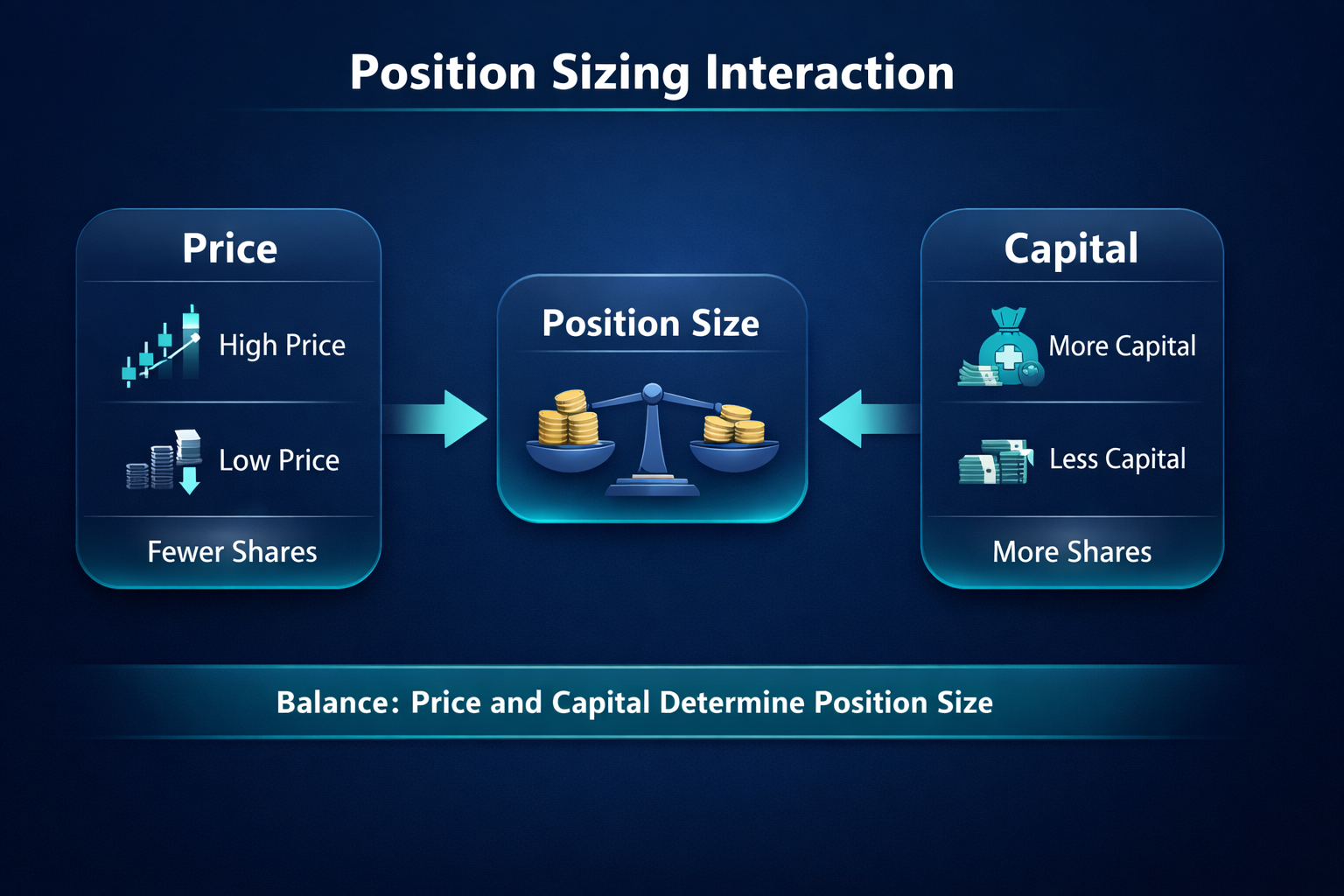
Financial markets involve continuous interaction between participants, where both price movement and capital allocation play a role in shaping market behaviour.
While price reflects the interaction between buyers and sellers, position sizing reflects how participants allocate capital within this system. Together, these elements influence overall market dynamics.
In Indian financial markets, increasing participation in both equity and derivatives segments has made capital allocation decisions more relevant. Different instruments require varying levels of exposure due to factors such as contract size, volatility, and liquidity.
Research-oriented observations in financial education suggest that beginners often focus primarily on price direction while underestimating the importance of how capital is distributed across positions.
Position sizing, therefore, represents a structural component of market participation rather than a directional view.
Role of Position Sizing in Market Structure
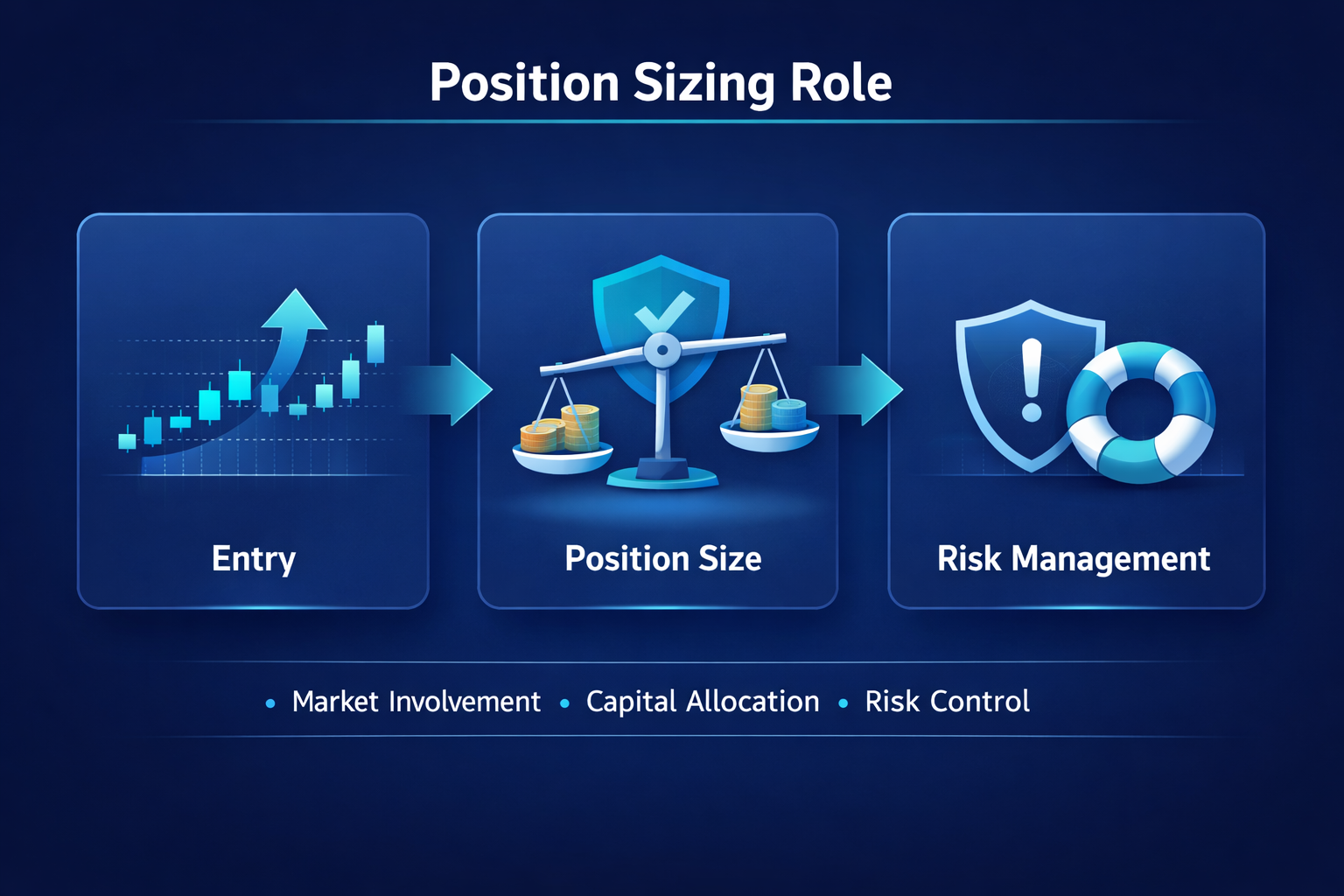
Position sizing defines the scale of engagement in financial markets by determining how much capital is allocated to each position.
Market Context (India-specific)
In Indian markets, capital allocation varies across equities and derivatives, where contract sizes and margin requirements influence exposure levels.
Behavioural Considerations
Beginners may overlook position sizing, focusing instead on price movement, leading to imbalance in understanding market interaction.
Capital Allocation Across Instruments
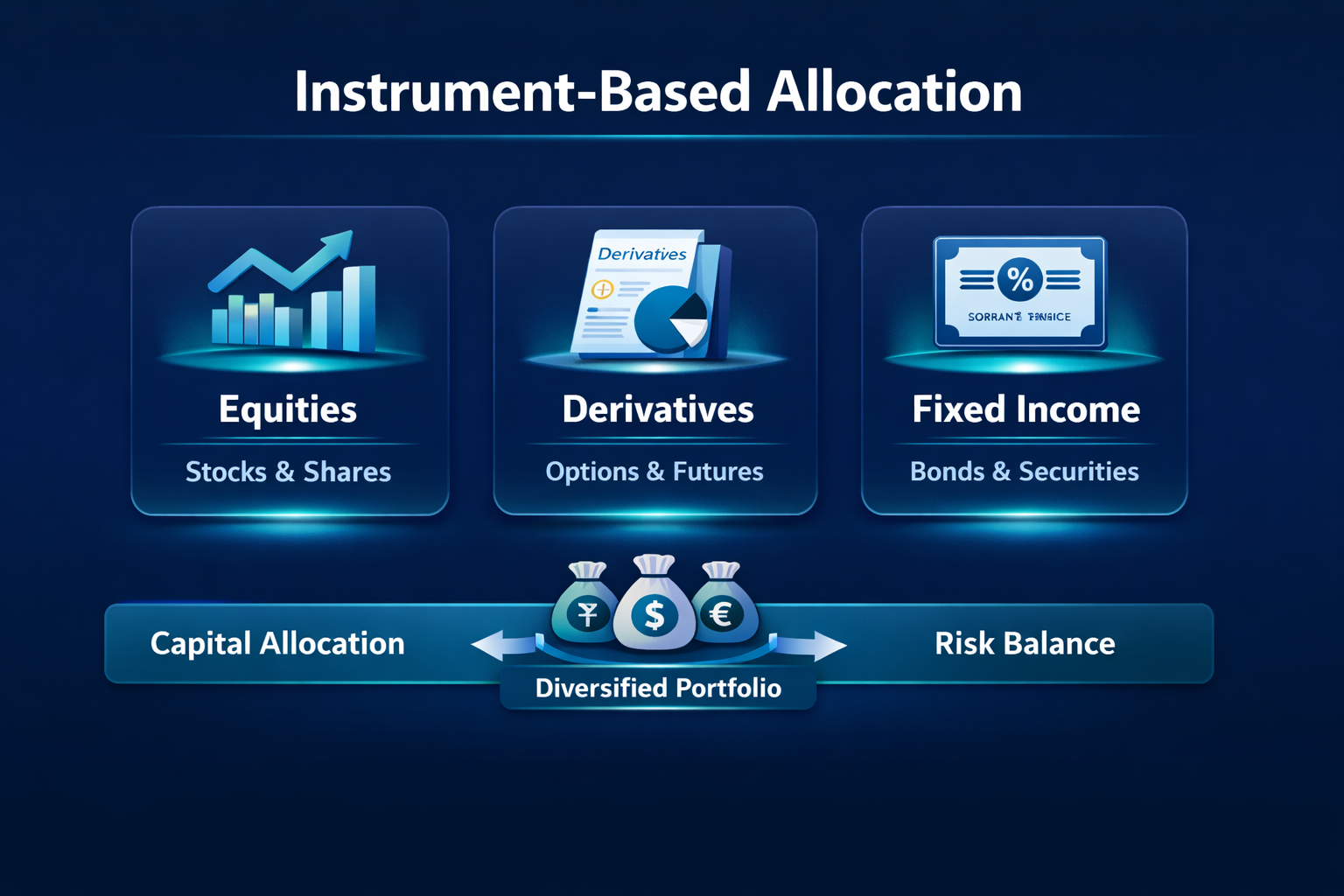
Different financial instruments require different levels of capital allocation, influencing how exposure is distributed across the market.
Market Context (India-specific)
In India, derivatives instruments such as index options and futures involve standardized contract sizes, affecting how position sizing is structured.
Behavioural Considerations
Learners may assume similar exposure across instruments without recognizing differences in contract structure.
Relationship Between Exposure and Risk
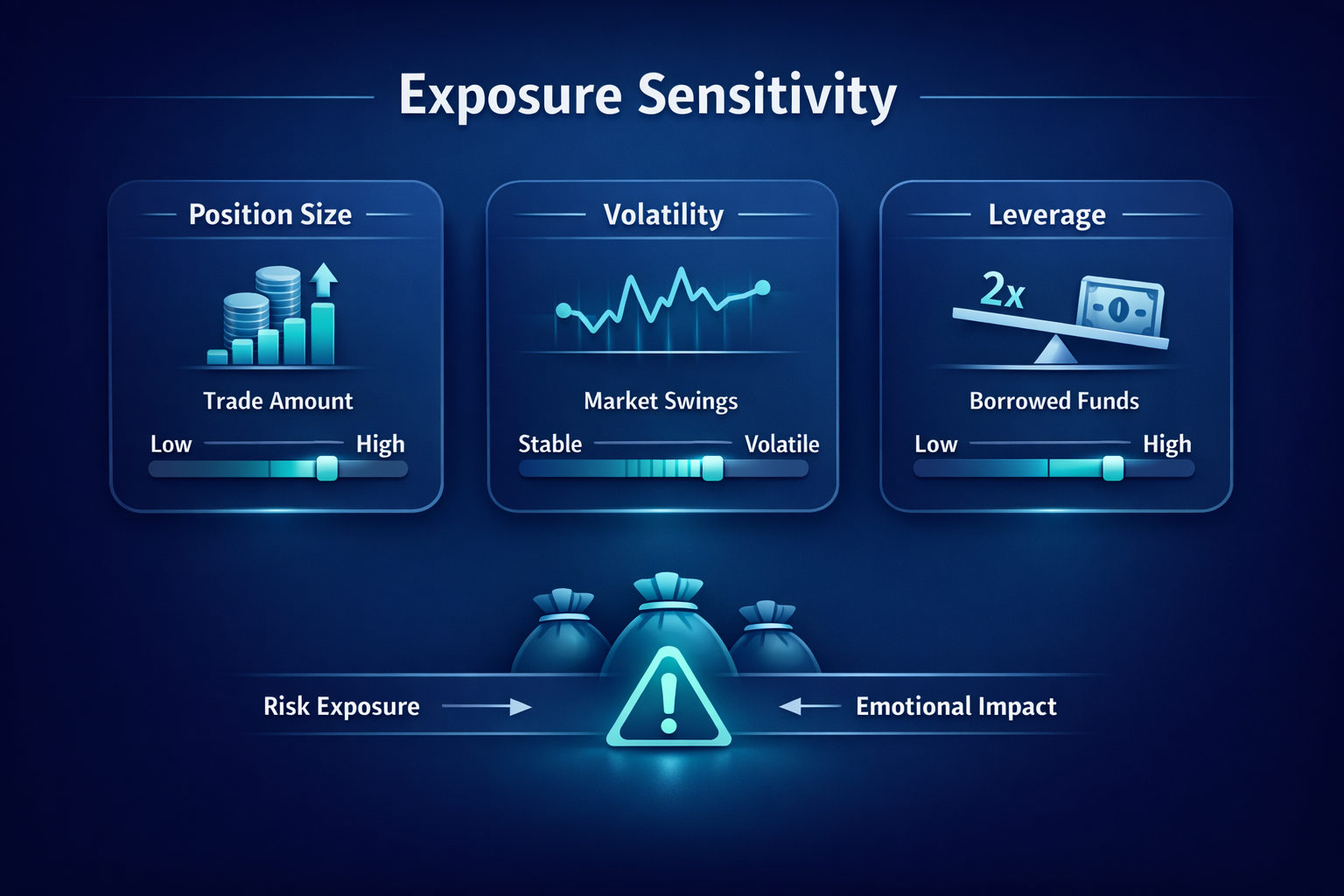
Exposure level directly influences the degree of sensitivity to price movement, affecting overall interaction with market fluctuations.
Market Context (India-specific)
In Indian markets, volatility in both equity and derivatives segments can impact how exposure translates into market outcomes.
Behavioural Considerations
Beginners may not fully recognize how varying exposure levels influence their interaction with market behaviour.
COMPARISON TABLE
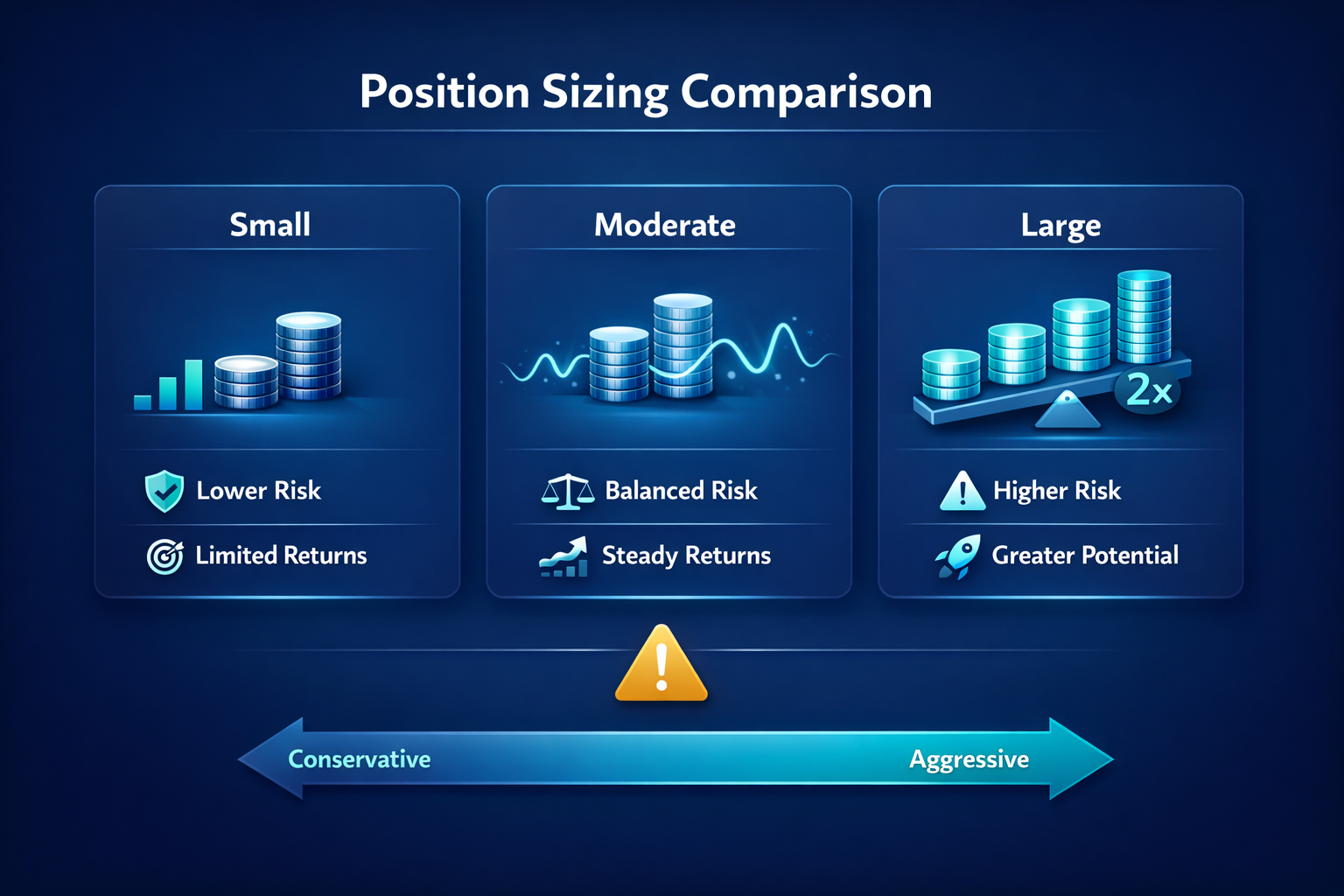
Concept Core Issue Market Impact Learning Challenge
Position Sizing Capital allocation Exposure variation Structuring participation
Capital Exposure Level of involvement Sensitivity to movement Understanding scale
Instrument Type Different requirements Variable exposure Adjusting interpretation
KEY TAKEAWAYS
position sizing defines capital allocation in markets
exposure influences interaction with price movement
different instruments require different allocation levels
market behaviour is affected by both price and exposure
understanding position sizing does not determine outcomes
COMMON BEGINNER MISTAKES
focusing only on price movement without considering exposure
assuming equal capital allocation across different instruments
misunderstanding the role of position sizing
ignoring structural differences between equity and derivatives
interpreting exposure without context
assuming familiarity equals understanding
LIMITATIONS
Position sizing provides a conceptual framework for understanding capital allocation, but it does not fully capture the complexity of financial markets.
Market behaviour is influenced by multiple variables including liquidity, volatility, and participant activity, which cannot be fully structured through a single concept.
In professional financial education, position sizing is treated as part of a broader framework rather than a standalone element.
RISK AWARENESS
Investor awareness material published by SEBI highlights that inadequate understanding of risk and exposure is a common issue among retail participants in India.
Financial stability insights from the Reserve Bank of India (RBI) emphasize that systemic and macroeconomic factors influence market behaviour.
These observations reinforce that exposure to financial markets involves uncertainty regardless of how capital is allocated.
WHAT THIS DOES NOT DO
Understanding position sizing does not ensure successful participation in financial markets.
Understanding ≠ outcome.
BEGINNER LEARNING PATH
Step 1 – understand financial market terminology
Step 2 – learn how price movement reflects market activity
Step 3 – study capital allocation concepts
Step 4 – explore different financial instruments
Step 5 – develop awareness of risk and exposure
FAQ SECTION
What is position sizing in trading?
It refers to how much capital is allocated to a particular market position.
Why is position sizing important for beginners?
It helps in understanding how exposure to market behaviour is structured.
Is position sizing related to risk?
Yes, exposure level influences how market movement affects participation.
Does position sizing differ across instruments?
Yes, different financial instruments require different capital allocation structures.
Can position sizing remove uncertainty?
No, financial markets remain uncertain regardless of allocation methods.
AUTHOR
Vicky Mehta is a stock market trainer with over 20+ years in financial markets and the founder of Succinct Learning Platforms Pvt. Ltd.
He holds an MBA in Financial Markets in collaboration with NSE Academy and is an NSE Certified Market Professional.
His work focuses on structured financial education, risk management frameworks, and disciplined market understanding.
SOURCES
SEBI – Investor Awareness & Protection material
NSE – Market activity and derivatives participation
RBI – Financial Stability Reports
DISCLAIMER
This article is provided for educational and informational purposes only and should not be interpreted as investment or trading advice.
Financial markets involve risk, including the potential loss of capital. Readers should consult a SEBI-registered investment advisor before making financial decisions.
other related topics : How to Read Stock Charts for Beginners (Indian Market Guide)