

Published: March 2026
Last Updated: April 2026
INTRODUCTION
Retail participation in Indian financial markets has increased significantly over the past decade, particularly across equity and derivatives segments.
However, increased access to trading platforms has not necessarily translated into clarity.
Most beginners equate starting trading with placing their first trade.
In structured financial education, it begins much earlier—with understanding how the market actually functions.
This guide is not focused on how to trade.
It is focused on how to approach trading as a structured process.
Because without structure, participation turns into random decision-making.
WHY THIS TOPIC MATTERS FOR LEARNERS
Beginners are often exposed to fragmented information about financial markets, including trading styles, tools, and market behaviour.
Without a structured framework, this leads to confusion.
A common gap among beginners is attempting participation without clarity on structure, instruments, and behaviour.
This creates a disconnect between expectation and actual market movement.
Understanding the process of starting in financial markets helps learners:
- recognize the importance of structured learning before participation
- understand how different components of the market system interact
- develop clarity about the progression of financial education
This leads to a more systematic approach to market understanding.
What Does Starting Trading Mean?
Starting trading refers to the process of entering financial markets with the intention of interacting with price movement, which involves understanding market structure, instruments, and participant behaviour.
It is a progression—not a single action.
What Is a Trading Checklist?
A trading checklist is a structured set of considerations used to organize how an individual approaches financial markets.
It focuses on awareness and readiness, not execution.
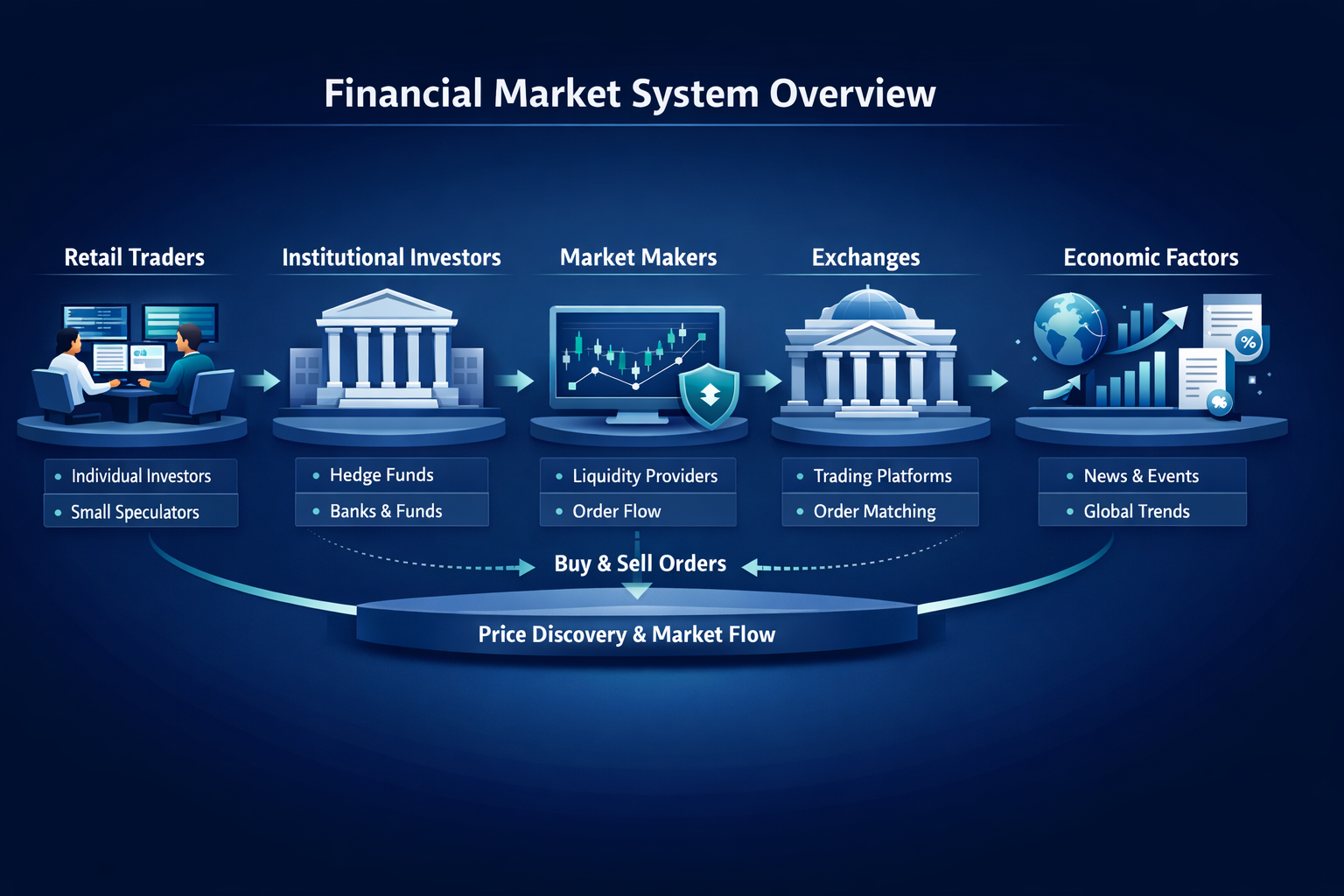
Financial markets function as organized systems where transactions occur through exchanges such as National Stock Exchange and Bombay Stock Exchange.
These systems are governed by regulatory frameworks established by Securities and Exchange Board of India.
Participants include institutions, professional traders, and retail individuals, all interacting through buying and selling activity. Price movement reflects this interaction.
Starting in financial markets is not an isolated action—it is a structured progression.
UNDERSTANDING MARKET STRUCTURE BEFORE ENTRY
Structural Characteristics
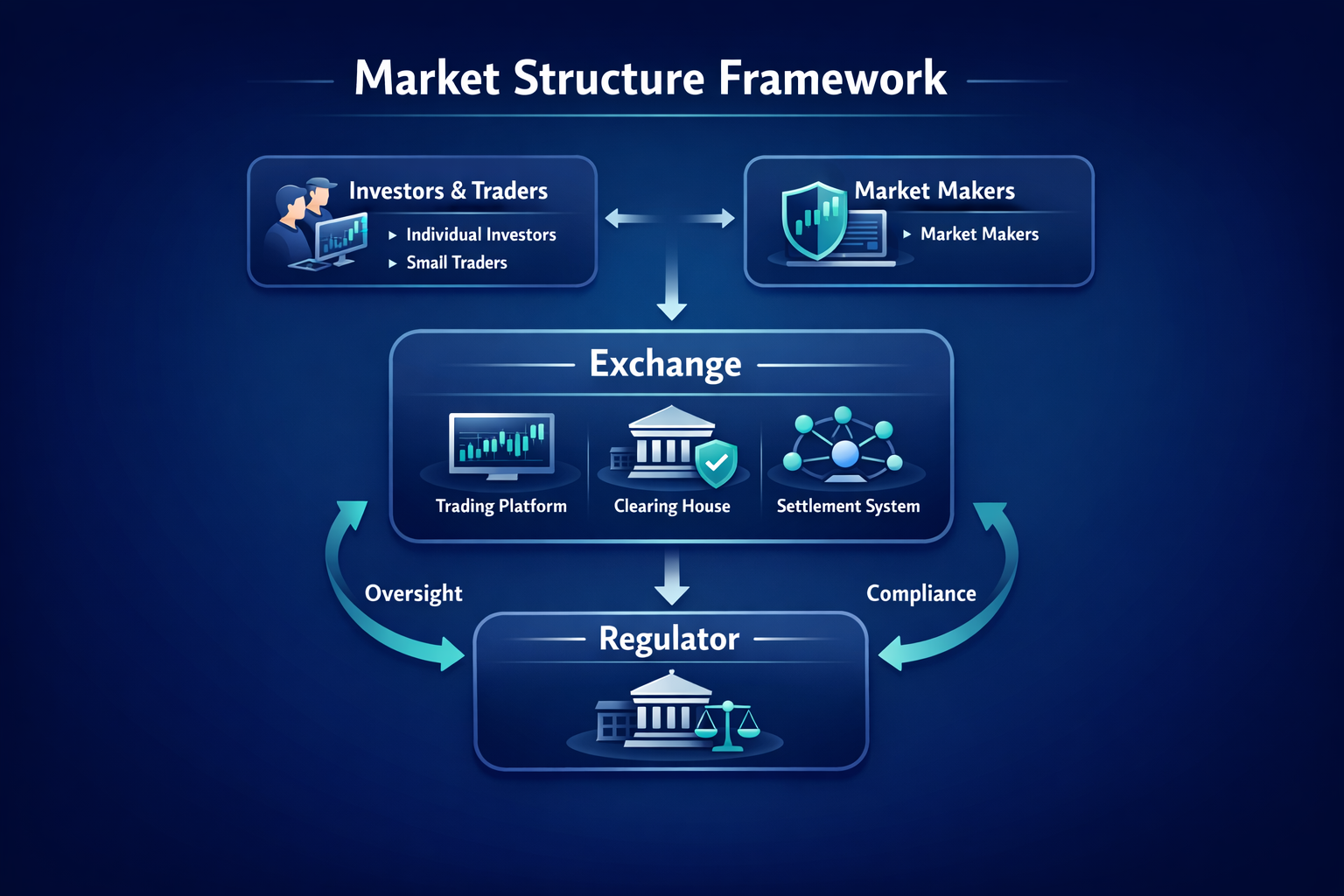
Financial markets operate through exchanges where transactions are standardized, regulated, and recorded. Market structure defines how these interactions take place.
Market Context (India)
In India, exchanges such as NSE and BSE facilitate trading activity, while SEBI regulates market conduct and investor protection.
Behavioural Considerations
Beginners often overlook how market structure influences price behaviour and decision-making.
AWARENESS OF FINANCIAL INSTRUMENTS
Structural Characteristics
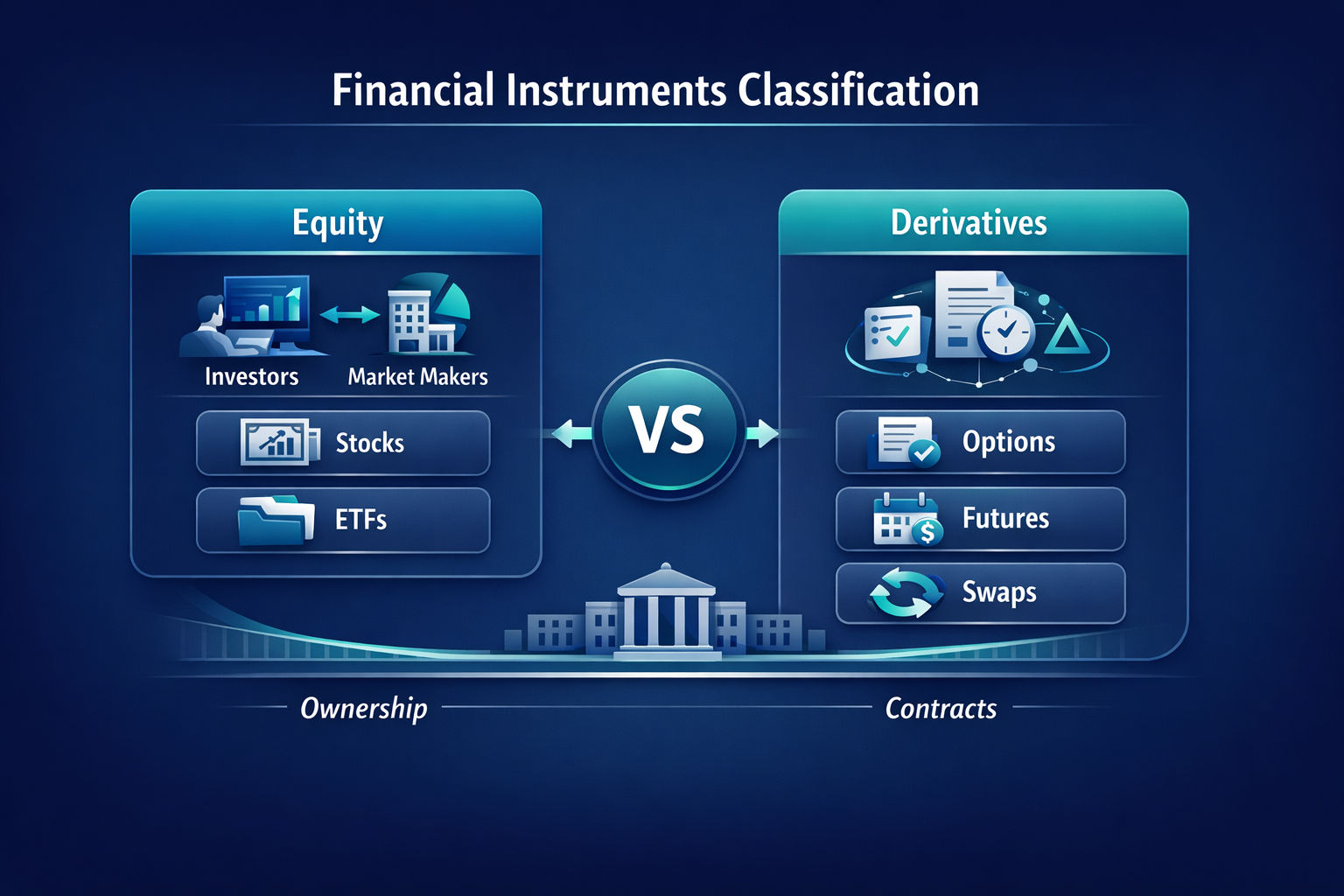
Financial markets include multiple instruments such as equities and derivatives, each with distinct characteristics.
Market Context (India)
In Indian markets, derivatives—especially index options—form a significant portion of trading activity.
Behavioural Considerations
Beginners often assume all instruments behave similarly, leading to misinterpretation.
ROLE OF LEARNING PROGRESSION
Structural Characteristics
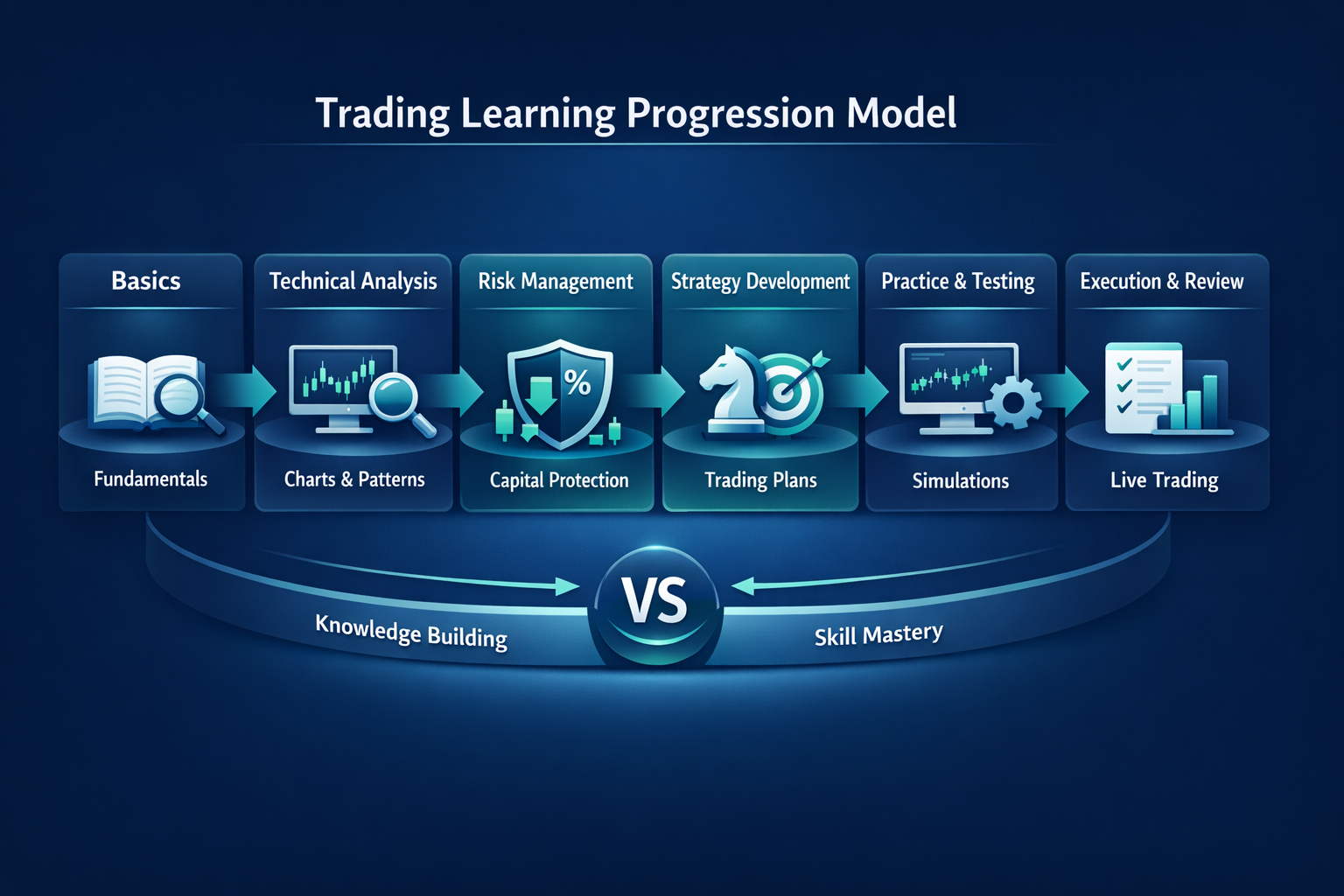
Entering financial markets involves a progression from basic understanding to more advanced concepts.
Market Context (India)
The rapid increase in retail participation highlights the need for structured learning pathways.
Behavioural Considerations
Many beginners attempt to accelerate this progression without building foundational clarity.
COMPARISON TABLE
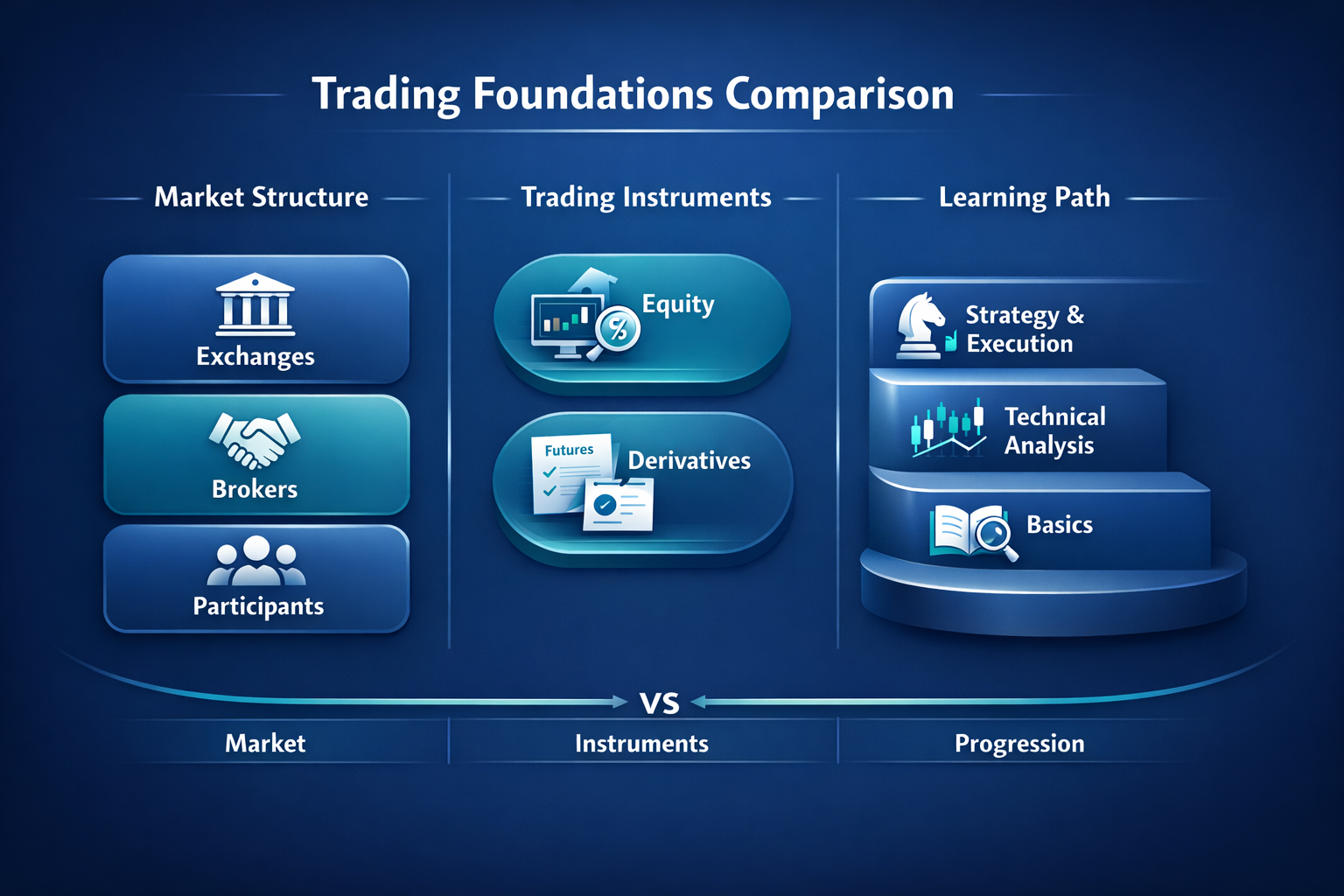
| Concept | Core Issue | Market Impact | Learning Challenge |
|---|---|---|---|
| Market Structure | Lack of understanding | Misinterpretation | System awareness |
| Financial Instruments | Different characteristics | Variable behaviour | Conceptual clarity |
| Learning Progression | Skipping stages | Incomplete understanding | Structured learning |
KEY TAKEAWAYS
- starting trading is a structured learning process
- financial markets function as organized systems
- different instruments behave differently
- learning progression is essential for clarity
- understanding does not determine outcomes
COMMON BEGINNER MISTAKES
- attempting to enter markets without understanding structure
- confusing access with understanding
- ignoring differences between financial instruments
- skipping foundational learning stages
- relying on fragmented information
- assuming familiarity equals readiness
LIMITATIONS
Understanding the conceptual process of entering financial markets provides structure, but it does not capture real-time dynamics.
Markets are influenced by institutional activity, liquidity, and macroeconomic conditions.
Starting in markets should be viewed as a continuous learning process.
RISK AWARENESS
Investor awareness initiatives by Securities and Exchange Board of India highlight that lack of structured understanding remains a major challenge.
Insights from Reserve Bank of India indicate that broader economic factors influence market behaviour.
Financial markets involve uncertainty regardless of preparation.
WHAT THIS DOES NOT DO
Understanding how to start trading does not ensure successful participation.
Understanding ≠ outcome.
BEGINNER LEARNING PATH
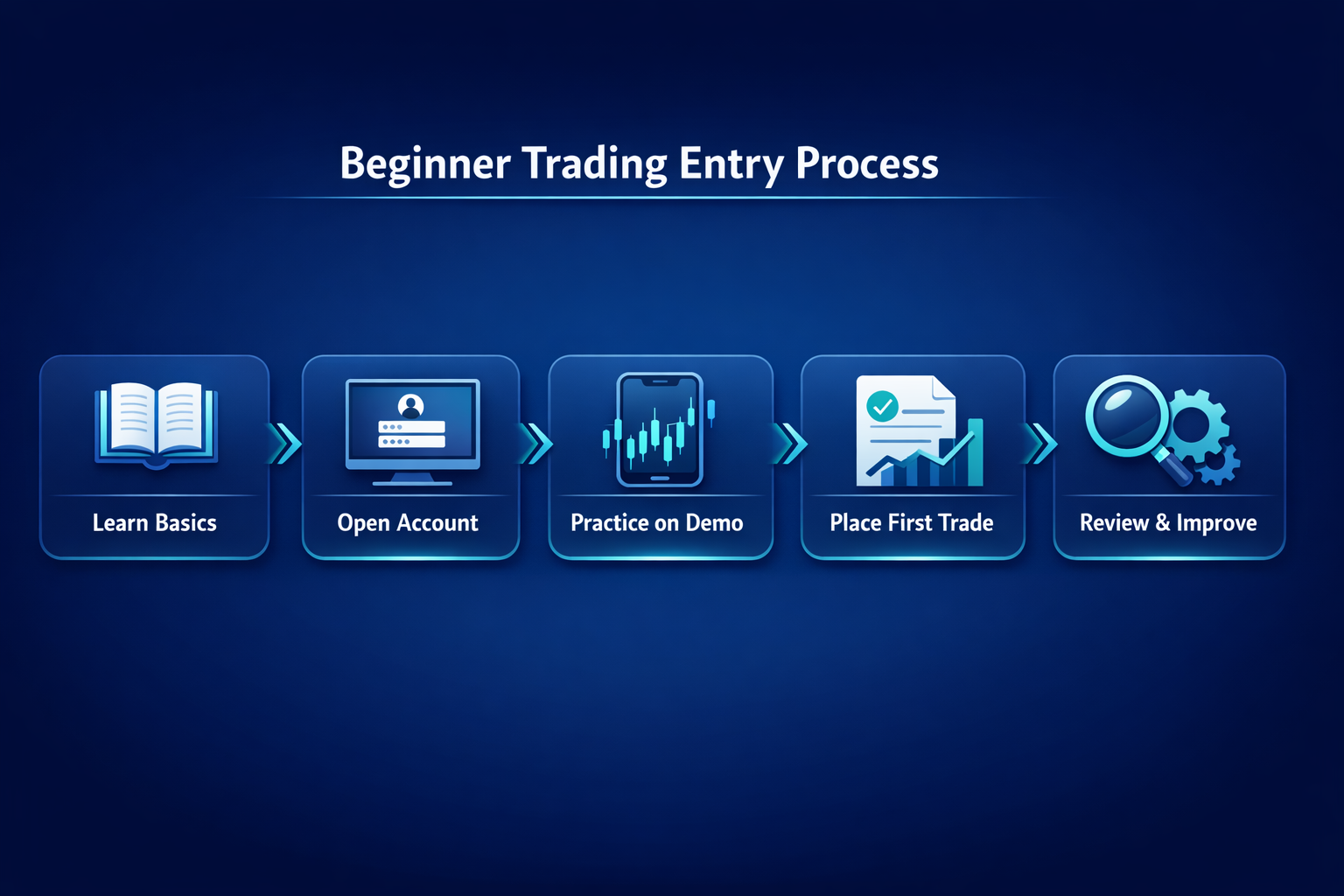
Step 1 – understand financial market terminology
Step 2 – study market structure and exchanges
Step 3 – learn about financial instruments
Step 4 – explore behavioural aspects of markets
Step 5 – develop awareness of uncertainty and risk
FAQ SECTION
What does starting trading mean in India?
It refers to entering financial markets through structured understanding of systems and instruments.
Why do beginners struggle to start trading?
Due to lack of clarity about market structure and learning progression.
Is access to trading platforms enough?
Access does not replace structured understanding.
What is the role of a trading checklist?
It helps organize how learners approach market understanding.
Can beginners directly participate in markets?
Participation without understanding can lead to misinterpretation of market behaviour.
AUTHOR SECTION
Vicky Mehta is a stock market trainer with over 20+ years in financial markets and the Founder & CEO of Succinct Learning Platforms Pvt. Ltd.
He holds an MBA in Financial Markets in collaboration with NSE Academy and is an NSE Certified Market Professional.
His work focuses on structured financial education, risk management frameworks, and disciplined market understanding.
SOURCES
- SEBI – Investor Awareness Material
- NSE – Market Participation Data
- RBI – Financial Stability Reports
TRANSITION (IMPORTANT)
For learners who want to move beyond conceptual understanding, the next step is structured application.
This involves:
- defining a clear market approach
- understanding execution logic
- building a rule-based process
Without this transition, most learners remain stuck at the information stage.
DISCLAIMER
This content is for educational and informational purposes only and should not be interpreted as investment or trading advice.
Financial markets involve risk, including potential loss of capital. Readers should consult a SEBI-registered investment advisor before making financial decisions.
other related topics
Why Most Retail Traders Lose Money (Behavioural Analysis)
CONTINUE LEARNING
If you’re trying to understand markets in a more structured way,
I share short, focused breakdowns regularly here: