

Published: March 2026
Last Updated: April 2026
INTRODUCTION
Retail participation in Indian financial markets has increased significantly in recent years, particularly in derivatives segments. Investor awareness material published by the Securities and Exchange Board of India highlights that many new participants enter markets without a structured understanding of risk, behaviour, and market dynamics.
Data from exchanges such as the National Stock Exchange indicates that retail activity is highly concentrated in short-term segments, especially index derivatives. However, participation levels do not necessarily reflect depth of understanding.
Many participants observe price movement, but fewer understand how behaviour influences their interpretation of that movement.
For beginners, early experiences in financial markets are often shaped by behavioural responses rather than structured frameworks.
This article provides educational insights into why many retail traders face difficulties in financial markets, focusing on behavioural and structural factors rather than outcomes.
WHY THIS TOPIC MATTERS FOR LEARNERS
Beginners entering financial markets are often exposed to simplified narratives about price movement and trading opportunities. These narratives may not fully reflect the complexity of actual market systems.
In structured financial education, it is commonly observed that learners focus on isolated elements such as price movement or indicators without understanding behavioural influences.
Understanding behavioural factors helps learners:
- Recognize how psychological responses influence market interpretation
- Identify common patterns in early-stage participation
- Develop awareness of how behaviour interacts with market structure
This contributes to a more realistic understanding of financial markets.
What Are Retail Trading Losses?
Retail trading losses refer to outcomes experienced by individual participants due to misinterpretation of market behaviour, exposure to risk, and behavioural biases.
What Are Behavioural Biases in Financial Markets?
Behavioural biases are psychological tendencies that influence how individuals interpret and react to market information.
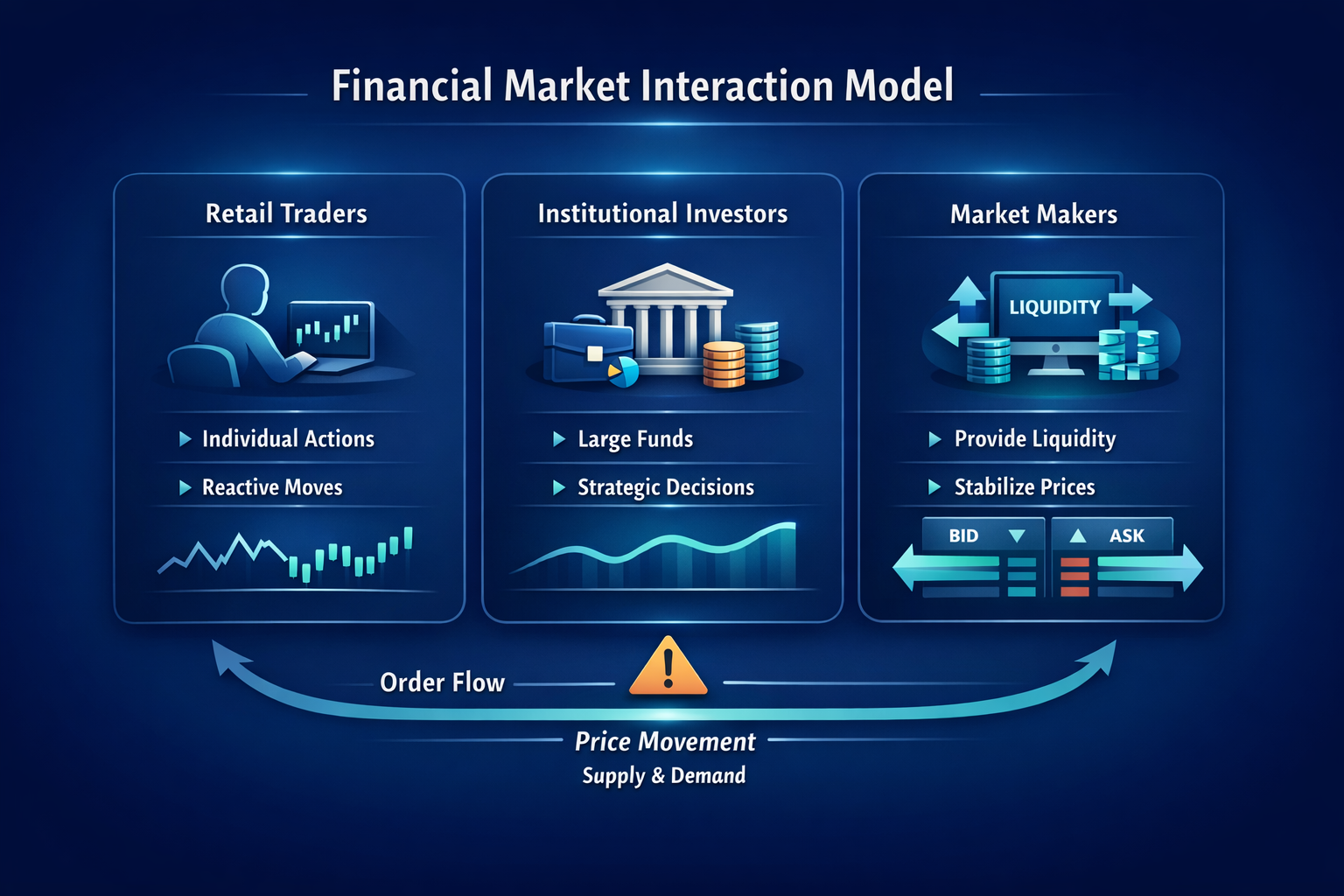
Financial markets function through the interaction of multiple participants, including institutions, professional traders, and retail individuals. Price movement reflects this interaction and is influenced by liquidity, information flow, and behaviour.
Retail participants often enter this system without structured frameworks, relying on fragmented information or simplified interpretations. This creates a gap between market complexity and individual understanding.
In Indian financial markets, increased access to trading platforms and derivatives instruments has amplified participation without a corresponding increase in structured learning.
Understanding why retail traders face difficulties requires examining behavioural patterns rather than focusing only on market mechanics.
LACK OF STRUCTURED UNDERSTANDING
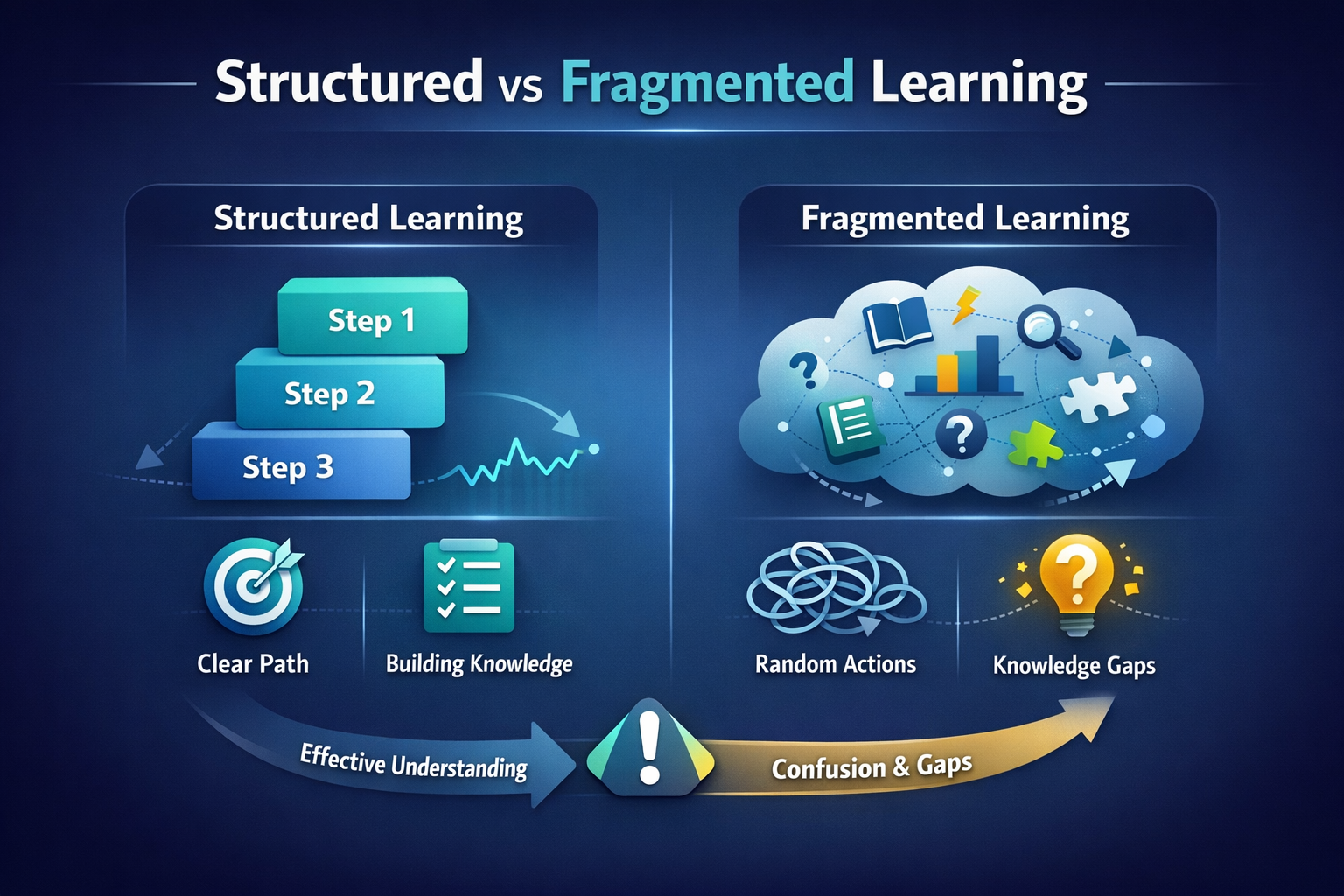
Structural Characteristics
Financial markets require integration of multiple concepts such as price behaviour, liquidity, and participant interaction. Lack of structure leads to fragmented understanding.
Market Context (India-specific)
Growth in online access has increased participation without necessarily improving conceptual clarity.
Behavioural Considerations
Beginners may interpret markets using isolated concepts, leading to inconsistent understanding.
INFLUENCE OF BEHAVIOURAL BIASES
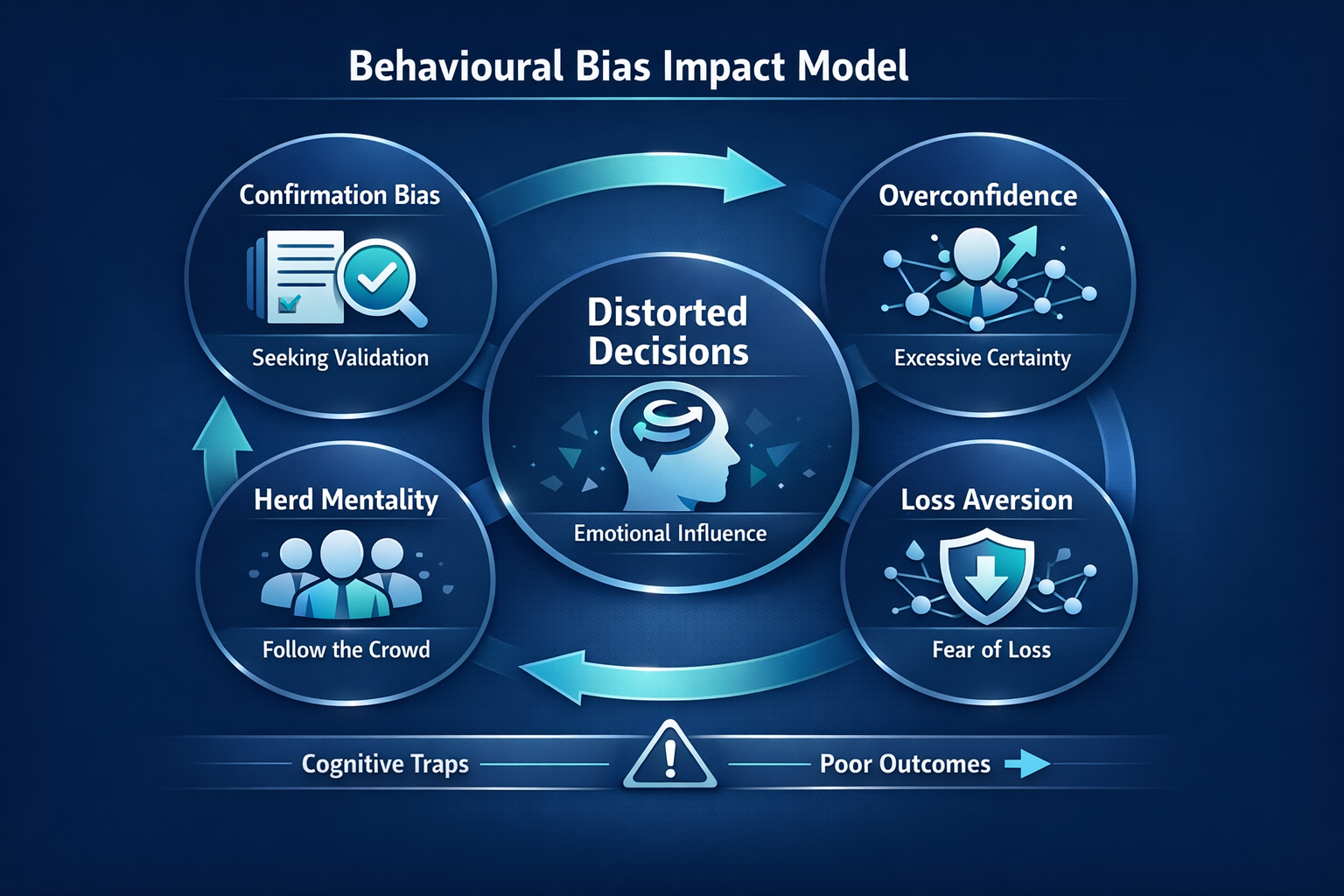
Structural Characteristics
Behavioural biases influence perception and interpretation of market information.
Market Context (India-specific)
Exposure to informal sources such as social media can amplify behavioural biases.
Behavioural Considerations
Common biases such as overconfidence, herd behaviour, and recency bias can affect decision-making.
EXPOSURE TO DERIVATIVES COMPLEXITY
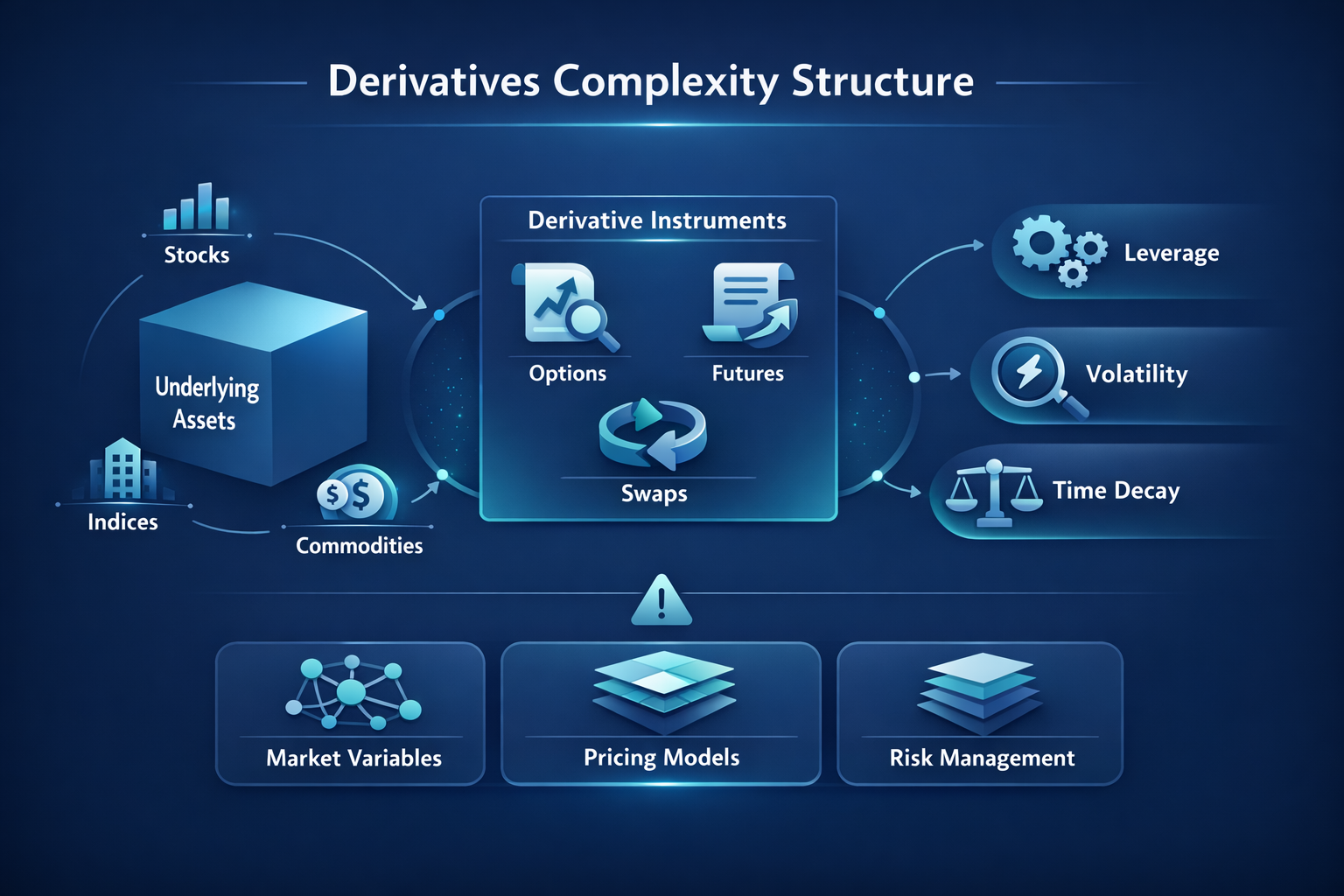
Structural Characteristics
Derivatives involve additional variables such as volatility and time-based factors.
Market Context (India-specific)
Retail participation in derivatives—especially index options—is significantly high.
Behavioural Considerations
Beginners may engage without fully understanding structural complexity, leading to misinterpretation.
COMPARISON TABLE
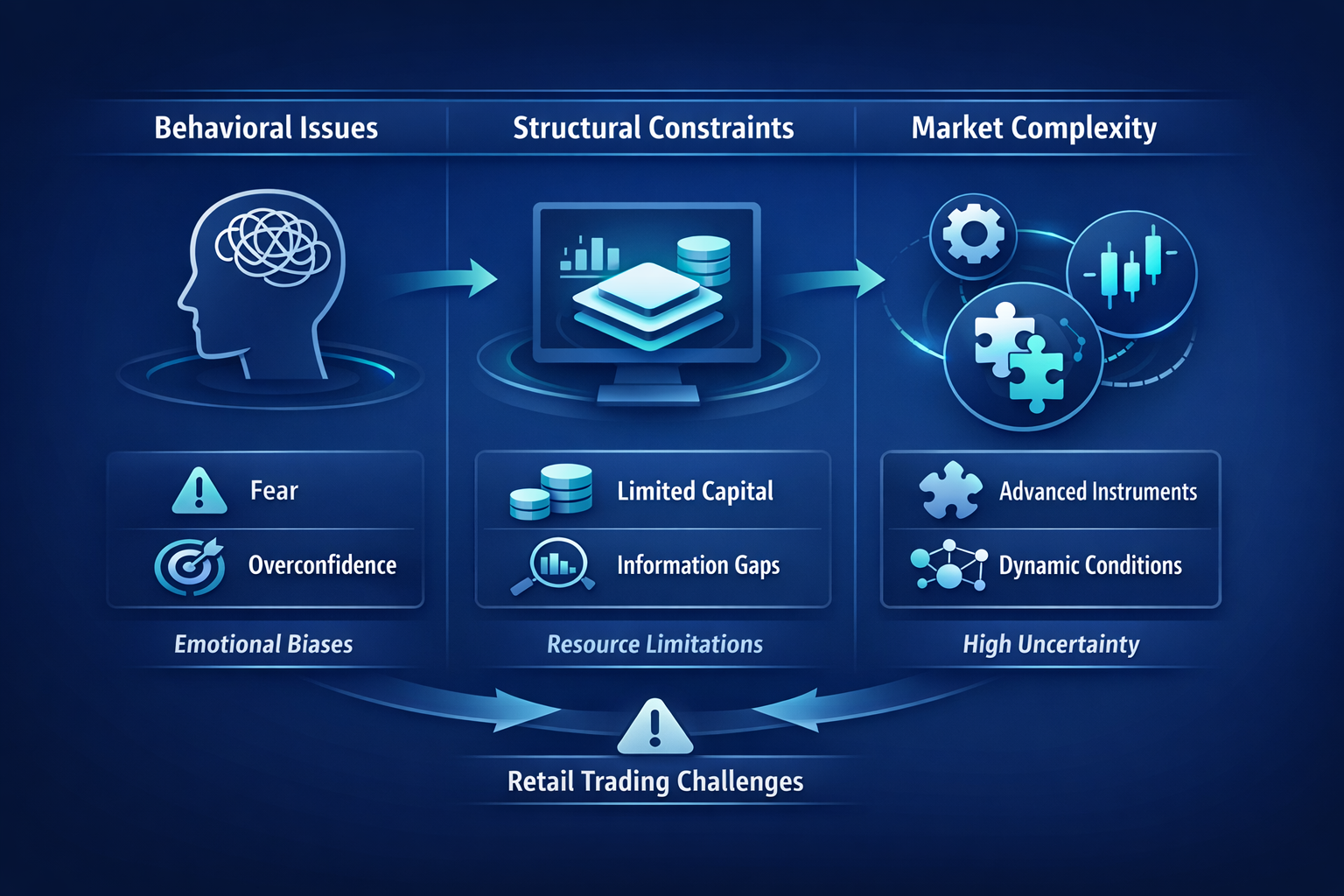
| Concept | Core Issue | Market Impact | Learning Challenge |
|---|---|---|---|
| Lack of Structure | Fragmented understanding | Misinterpretation | Integrating concepts |
| Behavioural Biases | Psychological influence | Inconsistent decisions | Awareness of bias |
| Derivatives Complexity | Structural difficulty | Increased uncertainty | Understanding variables |
KEY TAKEAWAYS
- Behavioural factors significantly influence market interpretation
- Financial markets operate as complex systems
- Lack of structure leads to repeated mistakes
- Derivatives introduce additional complexity
- Understanding behaviour does not determine outcomes
COMMON BEGINNER MISTAKES
- Relying on simplified market narratives
- Ignoring behavioural influences
- Overestimating understanding of market behaviour
- Engaging with complex instruments without clarity
- Reacting to short-term information without context
- Confusing familiarity with structured knowledge
LIMITATIONS
Behavioural analysis provides insight into patterns observed among retail participants. However, financial markets are influenced by multiple factors including liquidity, macroeconomic conditions, and institutional activity, which extend beyond individual behaviour.
RISK AWARENESS
Investor awareness material published by the Securities and Exchange Board of India highlights that inadequate understanding of risk and behaviour remains a significant challenge among retail participants.
Financial stability insights from the Reserve Bank of India emphasize that systemic and macroeconomic factors influence market behaviour.
These observations reinforce that financial markets operate under uncertainty regardless of participant experience.
BEGINNER LEARNING PATH
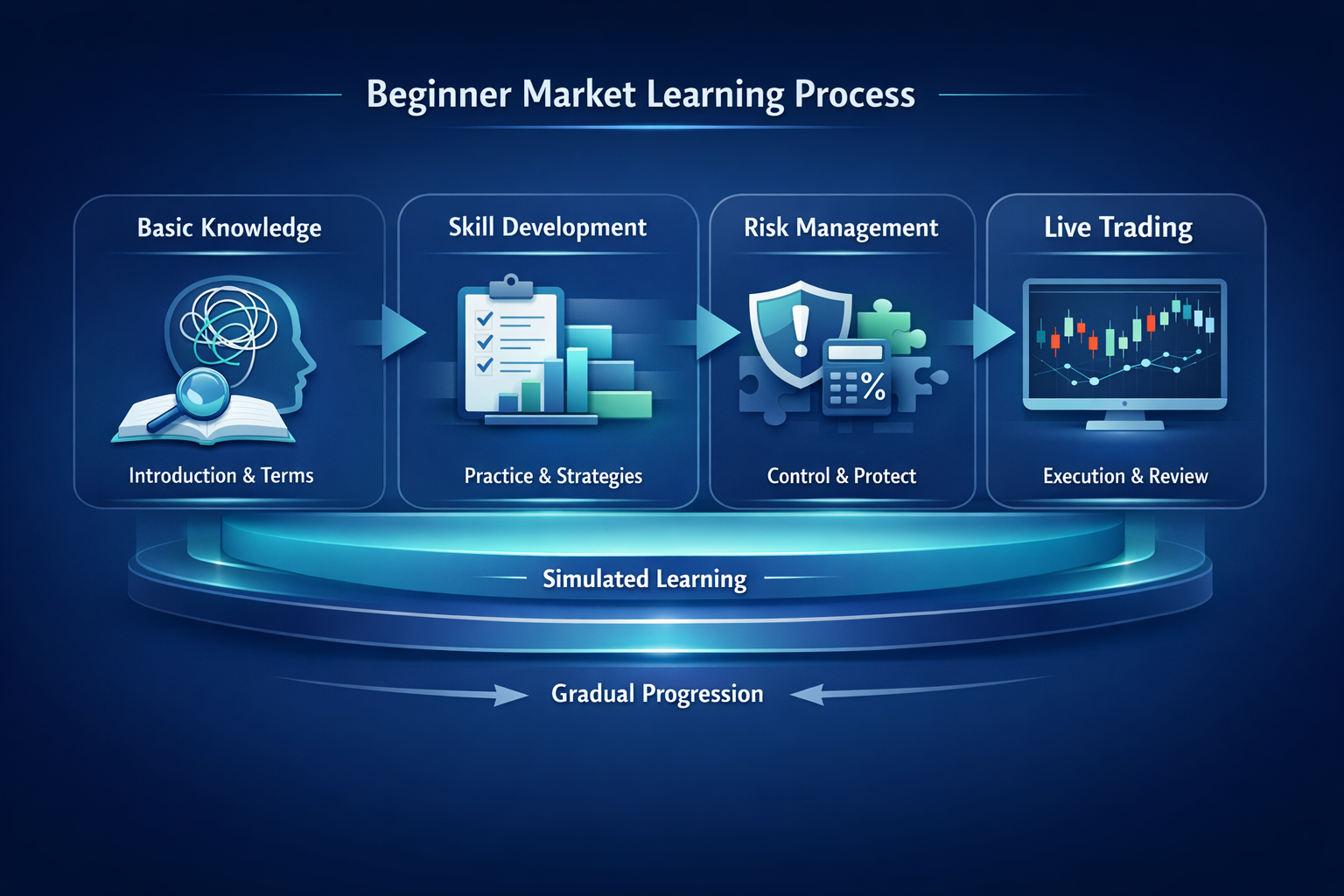
Step 1 – Understand basic financial market terminology
Step 2 – Study market structure and participant roles
Step 3 – Learn about behavioural biases
Step 4 – Explore derivatives and market complexity
Step 5 – Develop awareness of uncertainty and risk
FAQ SECTION
Why do most retail traders face difficulties in markets?
Due to behavioural biases and lack of structured understanding.
Are behavioural factors more important than technical factors?
Behavioural factors play a significant role in interpretation.
Why are derivatives challenging for beginners?
They involve additional structural variables.
Can behavioural mistakes be completely avoided?
Markets involve uncertainty, and behavioural influences are inherent.
Does experience remove behavioural biases?
Experience may improve awareness, but biases can still exist.
AUTHOR
Vicky Mehta is a stock market trainer with over 20+ years in financial markets and the Founder of Succinct Learning Platforms Pvt. Ltd.
He holds an MBA in Financial Markets in collaboration with the National Stock Exchange Academy and is an NSE Certified Market Professional.
His work focuses on structured financial education, risk awareness, and disciplined market understanding.
SOURCES
- SEBI – Investor Awareness & Protection Material
- NSE – Market Participation Data
- RBI – Financial Stability Reports
DISCLAIMER
This article is provided for educational and informational purposes only and should not be construed as investment or trading advice.
Financial markets involve risk, including the potential loss of capital. Readers should consult a SEBI-registered investment advisor before making financial decisions.
other related topics