

Published: March 2026
Last Updated: April 2026
INTRODUCTION
Backtesting is often presented as a way to “test” a trading strategy before using it.
For beginners, this creates a simple belief:
If a strategy worked in the past, it should work in the future.
It sounds logical.
But it is incomplete.
Because backtesting is not proof.
It is interpretation of historical behaviour.
With increasing participation in Indian financial markets, interest in system-based trading has grown significantly. Data from the National Stock Exchange of India reflects rising activity, particularly in derivatives segments.
As this participation grows, concepts like strategy testing are discussed more frequently.
But they are often misunderstood.
Access to data has increased.
Clarity about its use has not.
Investor education initiatives by the Securities and Exchange Board of India emphasize understanding market behaviour rather than relying on assumptions about outcomes.
Backtesting sits exactly at this intersection.
WHY THIS TOPIC MATTERS FOR LEARNERS
Beginners are often told:
“Test your strategy on past data.”
This creates an expectation:
That historical results provide certainty.
But financial markets operate under changing conditions.
So the real question is:
Are you understanding behaviour?
Or validating assumptions?
Understanding backtesting helps learners:
- Interpret historical data correctly
- Recognize differences between theory and live markets
- Understand limitations of system-based evaluation
Without this, backtesting becomes misleading.
What Is Backtesting?
Backtesting is the process of applying a defined trading concept to historical market data to observe how it would have behaved in past conditions.
It is analysis—not prediction.
What Is a Trading Strategy?
A trading strategy is a structured set of rules used to interpret market data and define participation.
It is a framework for decision-making.
EXPLANATION
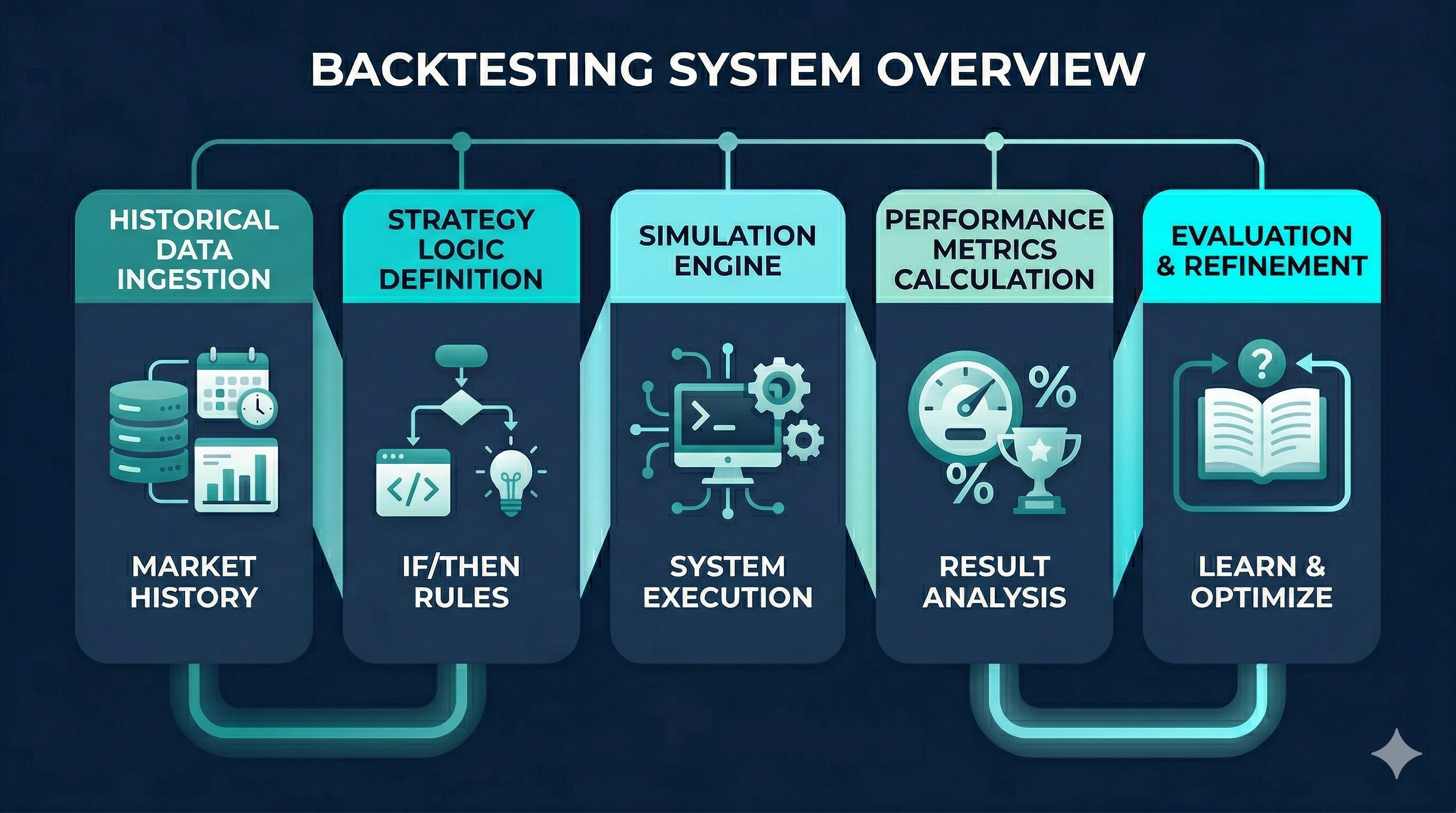
Financial markets continuously generate historical data through:
- Price movement
- Volume
- Participant activity
Backtesting uses this data to simulate how a rule-based system might have behaved.
In Indian markets, growing retail participation—especially in derivatives—has increased interest in such approaches.
But markets are not static.
They are influenced by:
- Liquidity
- Macroeconomic factors
- Participant behaviour
Which leads to a key insight:
Backtesting evaluates the past.
It does not capture the full complexity of live conditions.
HISTORICAL DATA AND MARKET STRUCTURE
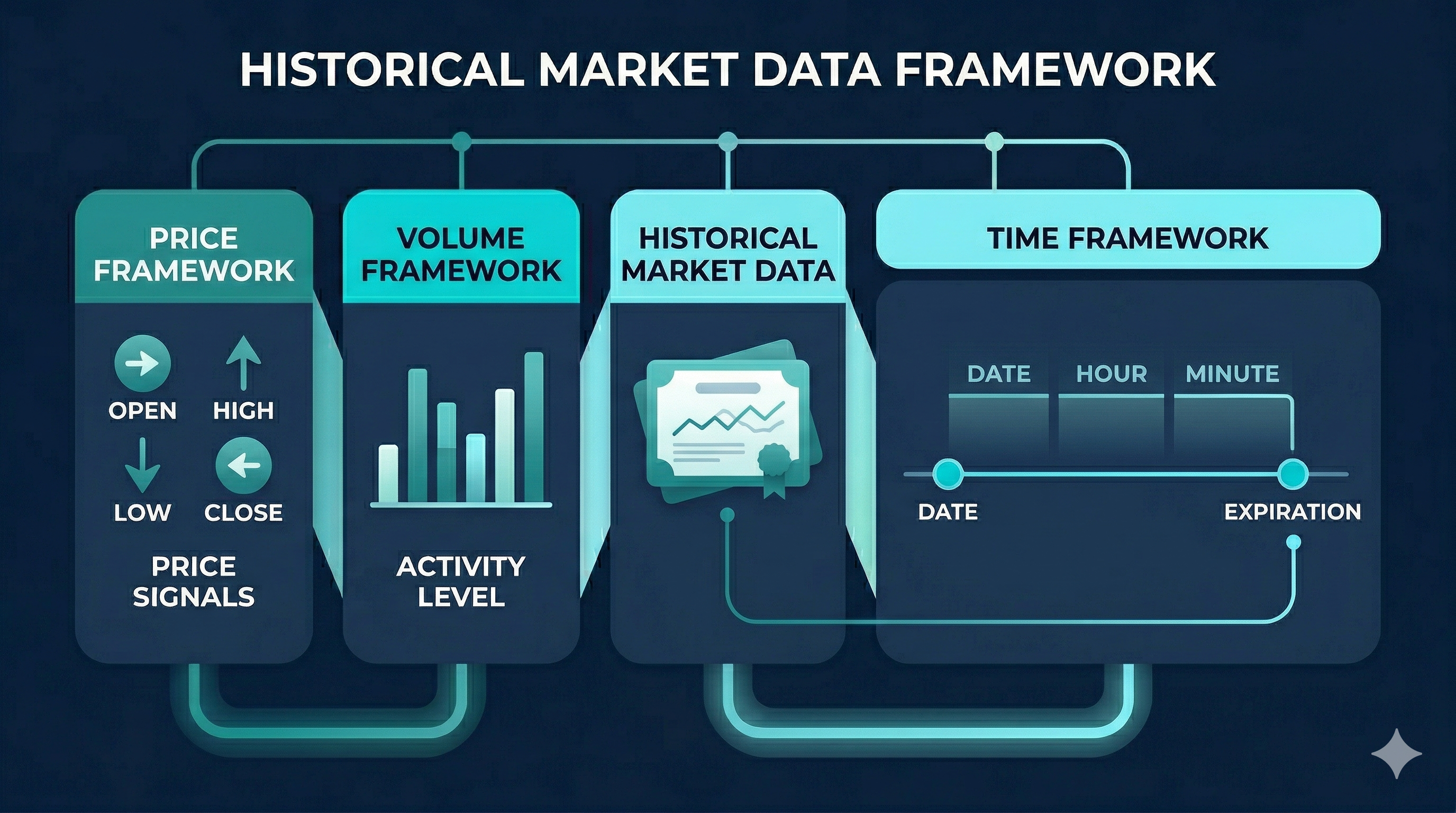
Structural Characteristics
Backtesting relies on historical data such as price, volume, and time.
Market Context (India)
Data is widely available through exchanges like the National Stock Exchange of India.
Behavioural Consideration
Beginners often assume past patterns are stable.
But market structure evolves.
RULE-BASED SYSTEM INTERPRETATION
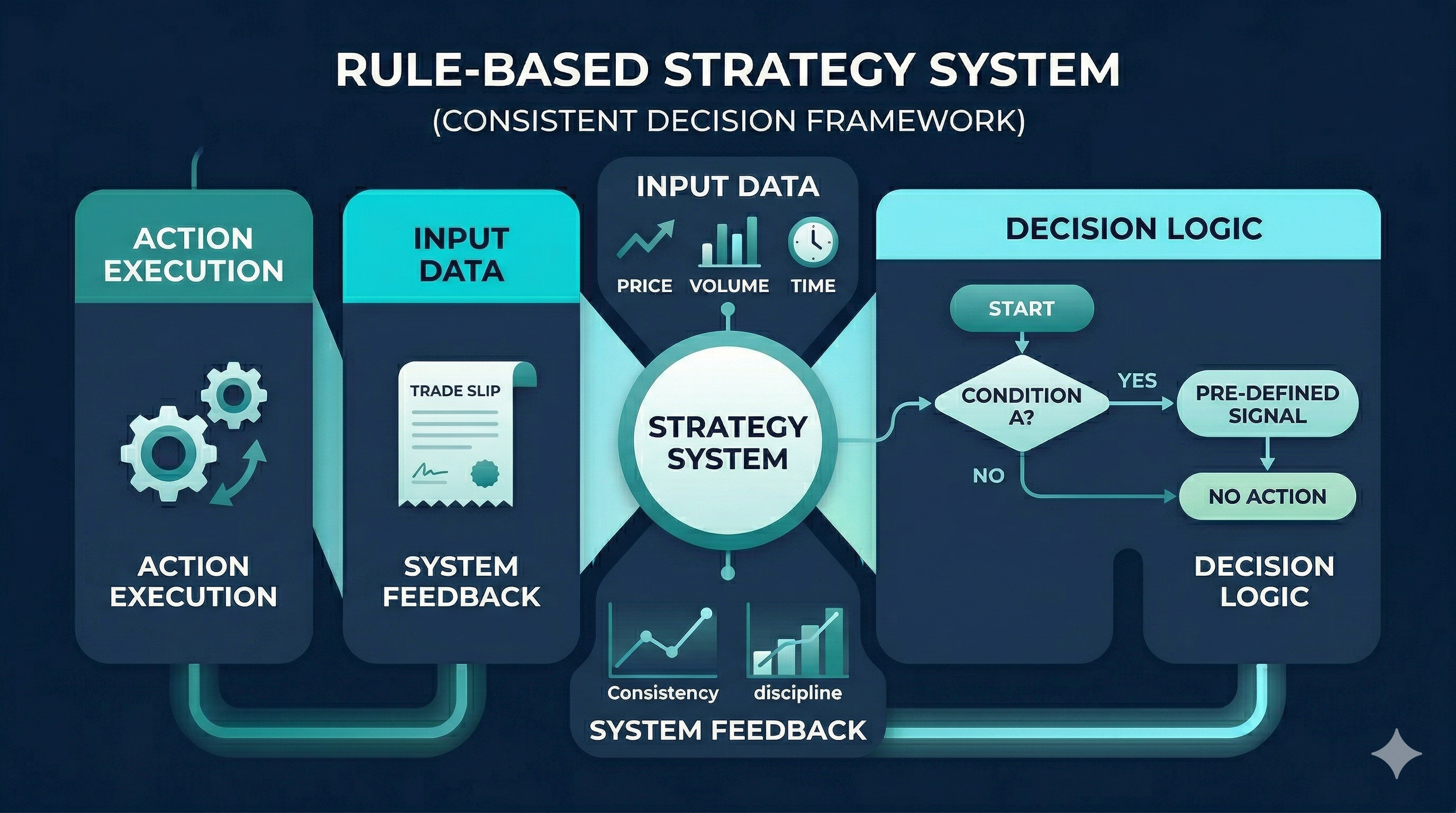
Structural Characteristics
Backtesting requires clearly defined and consistently applied rules.
Market Context (India)
System-based trading interest has increased among retail participants.
Behavioural Consideration
Learners often modify rules during testing.
Which invalidates the evaluation.
LIMITATIONS OF HISTORICAL SIMULATION
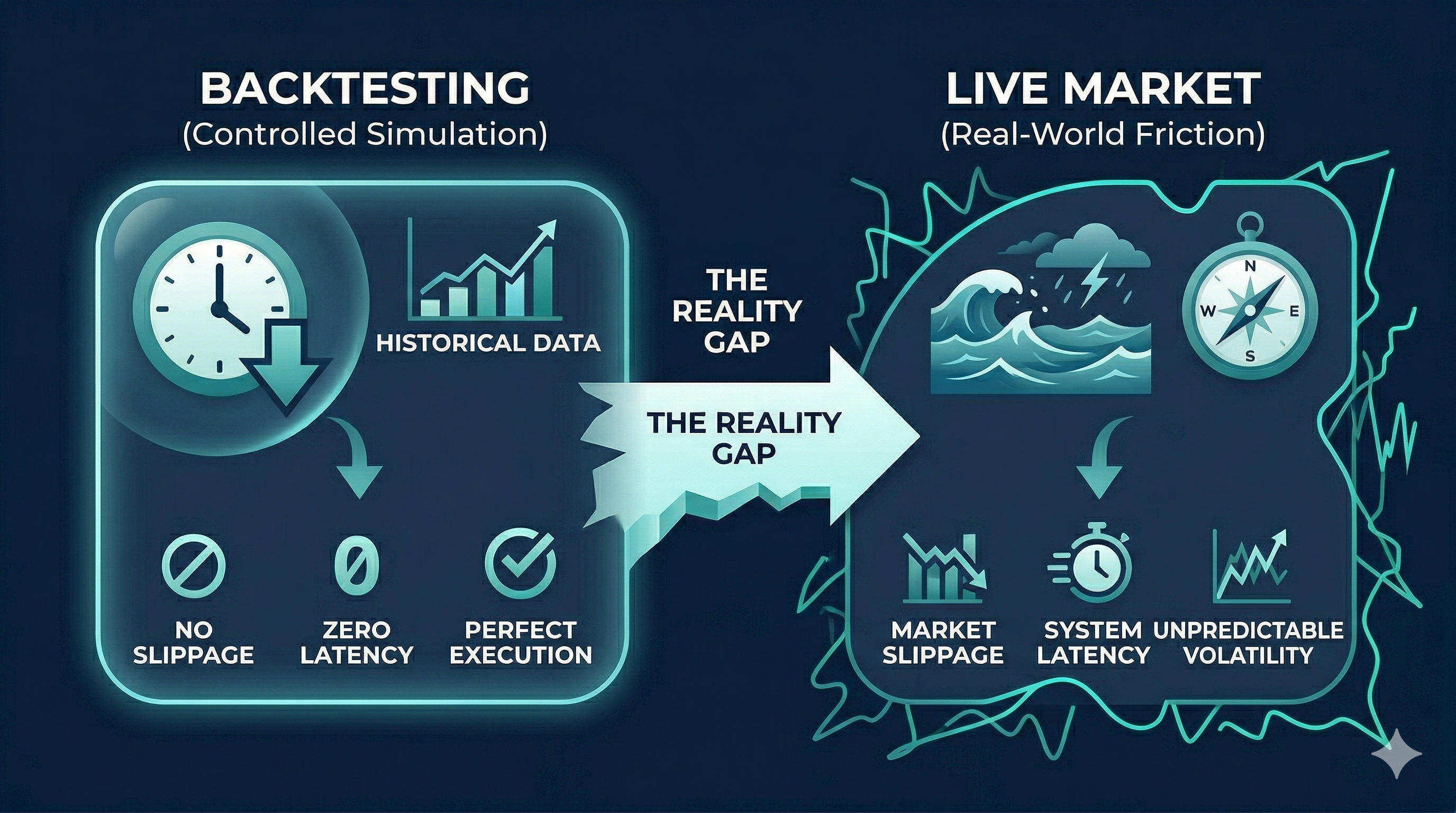
Structural Characteristics
Backtesting operates in a simulated environment.
Market Context (India)
Market conditions change due to regulation, liquidity, and macro factors.
Behavioural Consideration
Participants may rely heavily on simulated results.
But simulation is not execution.
TABLE
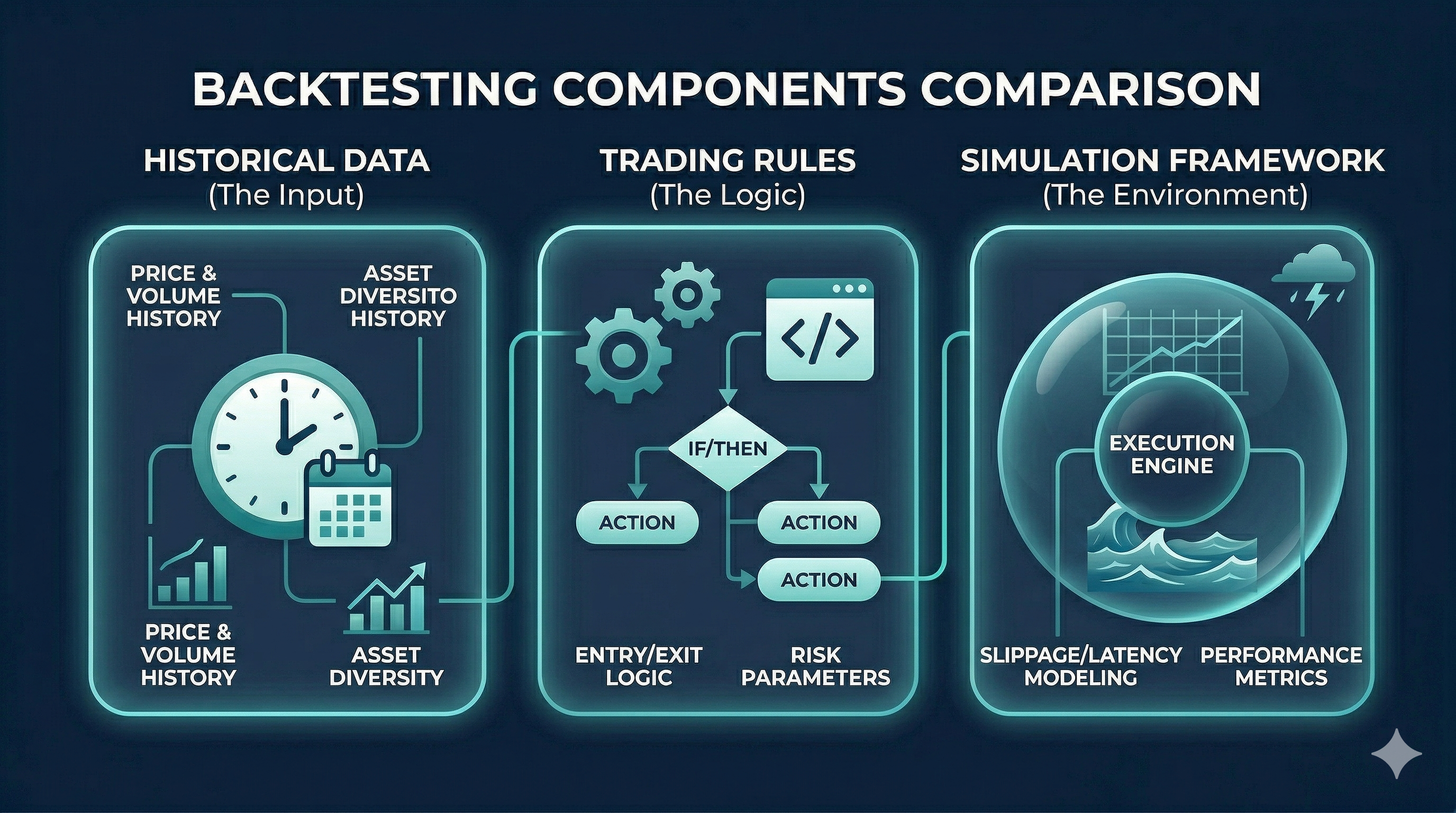
| Concept | Core Issue | Market Impact | Learning Challenge |
|---|---|---|---|
| Historical Data | Past-focused | Limited future relevance | Interpreting change |
| Rule-Based Systems | Consistency required | Variable outcomes | Maintaining discipline |
| Simulation vs Reality | Missing real factors | Execution differences | Understanding gaps |
KEY TAKEAWAYS
- Backtesting is based on historical data
- Strategies require clearly defined rules
- Simulation differs from real conditions
- Behavioural consistency matters
Understanding does not guarantee outcomes.
COMMON BEGINNER MISTAKES
- Assuming past performance predicts future behaviour
- Changing rules during testing
- Ignoring market structure changes
- Overlooking execution factors
- Treating backtesting as confirmation
These are not technical errors.
They are interpretation gaps.
LIMITATIONS
Backtesting provides insight into historical interaction.
But it does not represent:
- Real-time execution
- Behavioural pressure
- Market uncertainty
In professional practice, it is one component—not validation.
RISK AWARENESS
Investor awareness material from the Securities and Exchange Board of India highlights risks associated with relying on incomplete interpretations.
Insights from the Reserve Bank of India emphasize the role of broader economic conditions.
Markets operate under uncertainty.
Historical data cannot remove that.
WHAT THIS DOES NOT DO
Understanding backtesting:
- Does not ensure success
- Does not eliminate uncertainty
- Does not simplify markets
BEGINNER LEARNING PATH
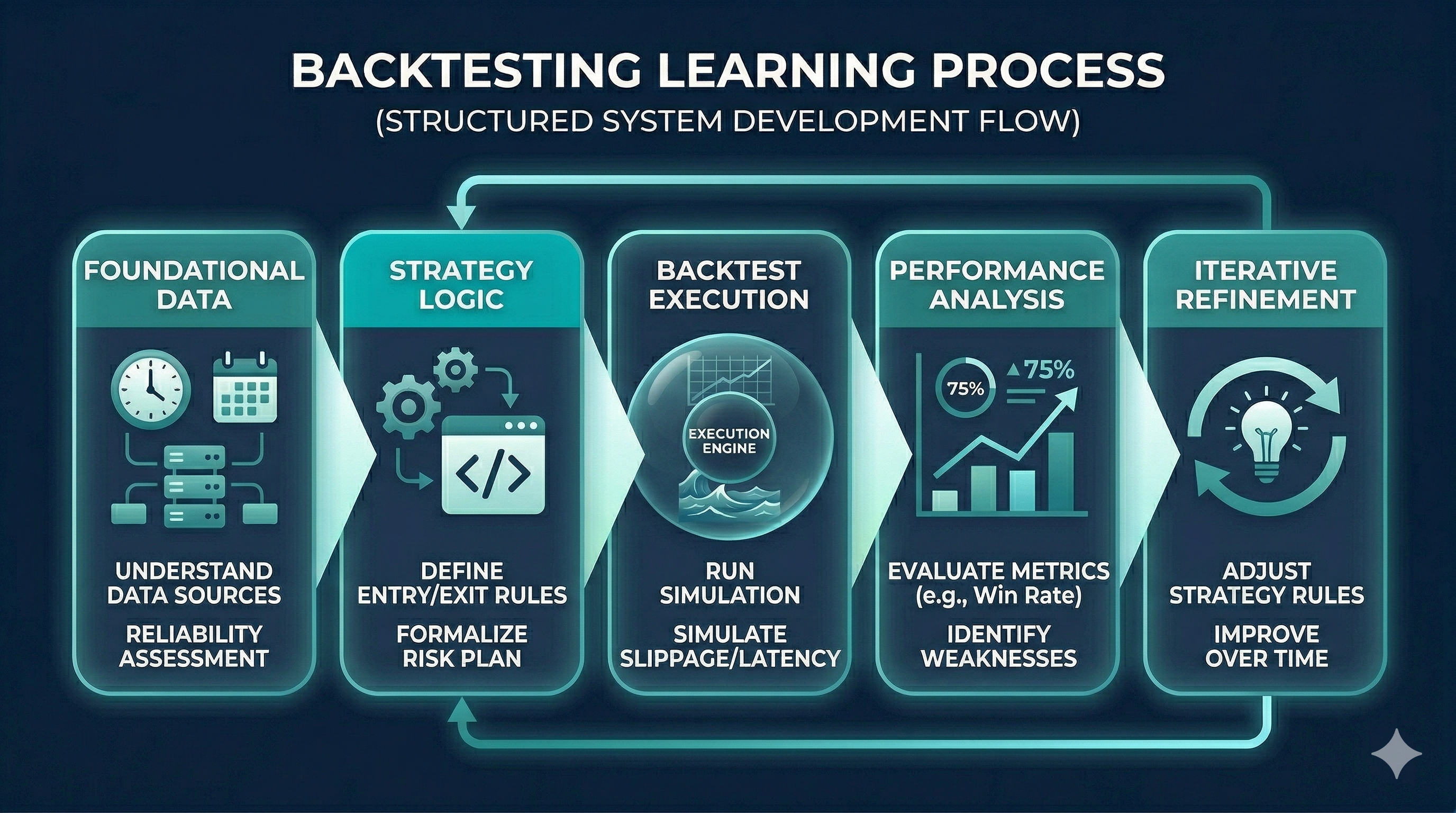
- Understand market structure
- Study price and volume behaviour
- Learn rule-based systems
- Explore historical data analysis
- Recognize limitations of simulation
FAQ SECTION
What is backtesting?
Applying a strategy to historical data.
Why is it used?
To observe how rules interact with past conditions.
Does it predict future results?
No. It reflects only historical behaviour.
What is the role of historical data?
It provides context—not certainty.
Is it widely used in India?
Yes, especially among system-based learners.
FINAL PERSPECTIVE
Backtesting is often seen as validation.
In reality, it is interpretation.
It does not prove a strategy.
It reveals how it behaved in the past.
Markets do not become predictable through data.
They become clearer through structured understanding.
AUTHOR
Vicky Mehta is a stock market trainer with over 20+ years in financial markets and the founder of Succinct Learning Platforms Pvt. Ltd.
He holds an MBA in Financial Markets in collaboration with NSE Academy and is an NSE Certified Market Professional.
His work focuses on structured financial education, risk management frameworks, and disciplined market understanding.
SOURCES
- SEBI – Investor Awareness Material
- NSE – Market Data
- RBI – Financial Stability Reports
DISCLAIMER
This article is for educational purposes only and does not constitute financial advice.
Financial markets involve risk, including potential loss of capital. Readers should consult a SEBI-registered investment advisor before making financial decisions.
other related topics
Most Beginners Think Options Are About Direction. They’re Not.
If you’re trying to understand markets in a more structured way,
I share short, focused breakdowns regularly on WhatsApp.
👉 Follow here: [https://whatsapp.com/channel/0029VbBvyJ2EAKWHIrvdm436]